



Designing functional brick surfaces to influence the urban microclimate and building energy requirements

Introduction
Climate change caused by global warming is one of the greatest challenges facing humanity in the 21st century. The natural disasters of recent years have shown that humans must take immediate action to tackle this problem. Every industry is currently racing against time to solve this problem. In the case of the construction industry, a phenomenon known as the urban heat island effect has recently gained importance. This urban heat island is caused by the absorption and retention of short-wave radiation by building materials such as facing bricks, roof tiles, clinker bricks, etc. in built-up areas. Due to this heat island effect, there is an increase in air temperature and a deterioration in air quality in built-up areas, which not only contributes to global warming but also reduces human comfort in the area. The main factors contributing to the urban heat island effect are reduced reflectivity, increased absorptivity, high heat capacity, and the bulk density of building materials.
Objective
The objective of this research project is to scientifically investigate the influence of various physical material parameters such as reflectivity, absorptivity, emissivity, specific heat capacity, bulk density, and specific thermal conductivity of building materials, as well as the influence of geometric parameters such as building height, building spacing, etc., on the air temperature of built-up areas. Based on the findings of this initial research, the goal is to develop new building materials (roof tiles, facing bricks) in such a way that the new material has a higher reflectivity and a lower absorptivity, so that the urban heat island effect can be significantly reduced without compromising the structural integrity of the building material, and that human thermal comfort is improved or at least the same thermal comfort is maintained in the building.
Approach and results
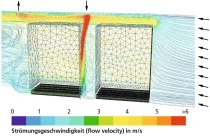
This research project was carried out jointly by the IZF Institut für Ziegelforschung Essen e.V. (Institute for Brick Research Essen) and the MFPA Materialforschungs- und -prüfanstalt at the Bauhaus University Weimar in a detailed and differentiated manner. In a first step, various commonly used building materials such as facing bricks, clinker bricks, and roof tiles were selected and their material properties such as bulk density, specific heat capacity, specific thermal conductivity, emissivity, reflectivity, and absorptivity were determined in various tests. The material properties determined were later used as input material parameters for the urban climate simulation with ENVI-met. With the help of this simulation, the influence of various material and geometry parameters on the air temperature of the urban area was investigated through various parameter studies. These parameter studies revealed that the reflectance and emissivity have the greatest influence on urban air temperature.
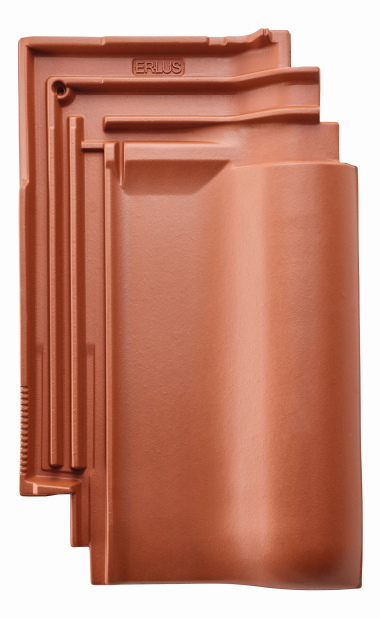
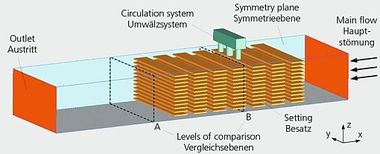
In this project, special attention was paid to the surface of the roof tiles in order to improve their radiation properties. In a next step, the surface of the roof tiles was modified to achieve better radiation properties (reflectance and emissivity). As part of the project, special IR-reflective coatings were developed which, through the targeted use of functionalized pigments, increase solar reflection and thus contribute to reducing urban heat development. Different pigments were used for different colors – white, red, and black. These pigments showed promising positive effects on the radiation properties (reflectance) of the roof tiles. Another approach to increasing reflection through defined microstructures showed theoretically positive effects in laboratory experiments with three-dimensional particle layers. However, due to the lack of suitable transparent materials for fixing to tiles, this approach could not be successfully implemented.
In the next step, experiments were carried out on the roof test bench to determine the influence of the material change on the roof surface on the interior and exterior air temperature. The roof test rig is a sophisticated facility at the IZF that simulates a real roof under various climatic conditions. Based on this experiment, the 3D CFD model WuFI Plus was created and validated using the results of the experiment. In addition, parameter studies were carried out and the influence of radiation properties on the interior and exterior air temperature was investigated. It was found that the effects on the interior room temperature are very small due to insulation, while the effects on the exterior air temperature, which is crucial for the cooling effect of the urban climate, are very large. However, the real-time experiments carried out at MFPA Weimar showed that roof tiles with better radiation properties have a positive effect not only on the outside air temperature but also on the inside temperature.
This is a research project of the Forschungsgemeinschaft der Ziegelindustrie e.V. (FGZ), which was carried out by the IZF and the MFPA. The pre-competitive IGF project 01IF22226 was funded by the German Federal Ministry for Economic Affairs and Energy with IGF funding.