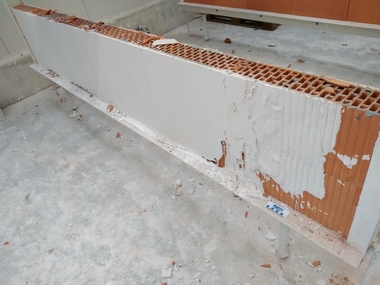




Patented geopolymer brick made from brick scrap is set to become a mainstream sustainable building material

On May 6, the Technical University Bergakademie Freiberg (TUBAF) was granted a European patent for a process for manufacturing a lightweight geopolymer brick from brick demolition waste. According to a press release dated May 8, 2026, the patent for the “Waste-Based Composition for the Production of a Geopolymer Lightweight Brick and a Method for Its Production” bears the patent number EP4015480. The process had already been recognized two years ago, in March 2024, with the Saxon State Prize “Construction Practice of the Future” in the building materials category. The Institute of Technical Chemistry at TUBAF is responsible for the development. According to project team member Dr. rer. nat. Michael Kraft, the institute is pursuing the goal of scaling up the process to an industrial level and further developing the brick as a building material in order to bring it to commercial application.
Manufacturing Process and Components
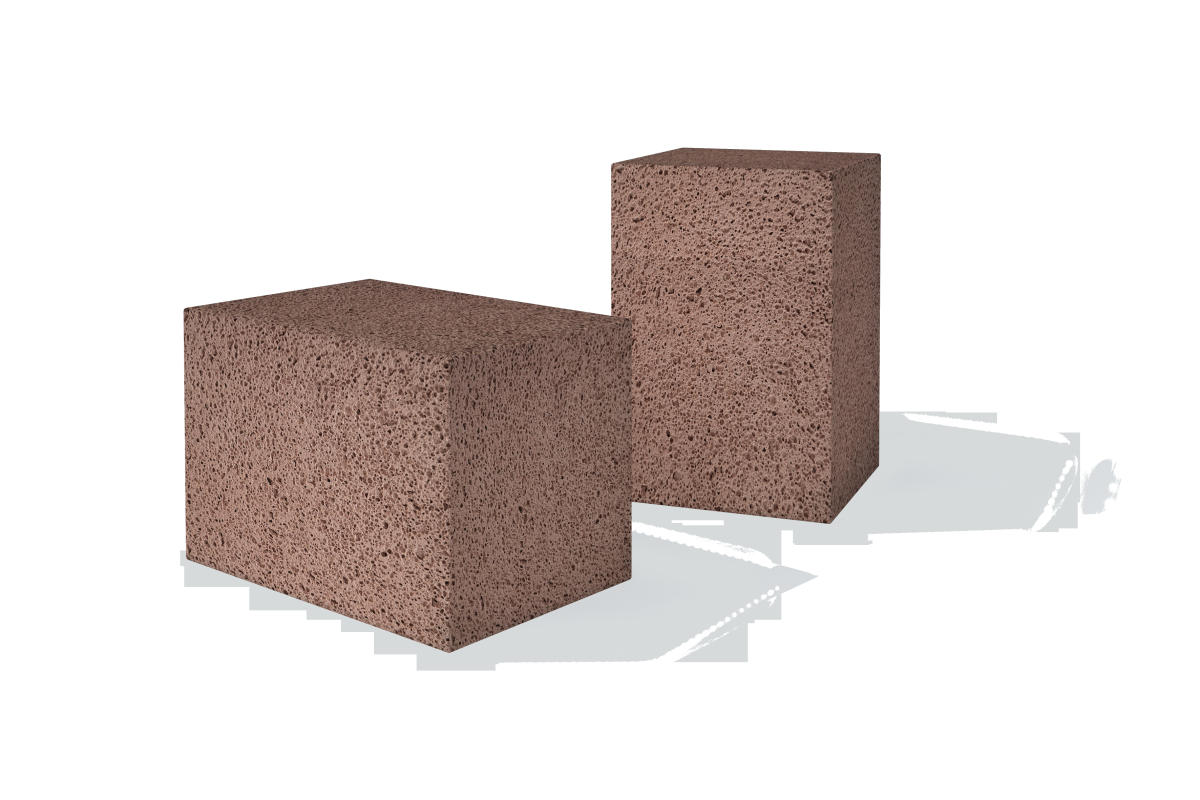
The lightweight brick is a recycled brick made entirely from demolition waste. According to TUBAF’s Technology Transfer Profile 25-05, the brick is produced by mixing a three-component blend: brick fines derived from brick-based waste materials, an aqueous alkaline solution, and a blowing agent based on secondary raw materials. This mixture must undergo chemical-thermal activation, which requires temperatures between 60 and 100 degrees Celsius. The blocks are produced by cutting the resulting foamed and cured polymerized material to size. Kraft explains that the manufacturing process is similar to that of traditional aerated concrete.
Currently, the process is operational on a laboratory or pilot plant scale. In manufacturing operations, batches of up to 300 kilograms can be produced, from which flat blocks are made.
Kraft explains that the brick-based waste materials required for the brick fines do not need to be sorted by type. Mineral impurities such as mortar or bathroom tiles do not pose a problem. Only organic impurities such as plant debris, wood, construction foam, and plastics interfere with the reaction.
Recycled brick with very low CO2 emissions
The process enables the production of an eco-friendly building material. It is based exclusively on secondary raw materials. According to the transfer data sheet, these can include brick waste in the form of kiln breakage, broken bricks (sawing waste from construction sites), as well as brick-rich masonry rubble contaminated with plaster, mortar, or ceramics. In Germany alone, a total of approximately 10 million metric tons of such material is generated annually, only a very small fraction of which is recycled. The temperature range required for geopolymerization—60 to 100 degrees—is very low. The process thus conserves energy resources.
Due to these two factors, the production of lightweight geopolymer stone generates very little CO2—about 80 percent less than conventional building materials, Kraft explains. The resulting emissions come from the transportation of materials as well as the fuel or electricity required to operate the kiln.
Objective and Next Steps
The inventors’ goal, as Kraft explains, is to develop a usable building material and to commercialize the patent. To this end, the institute intends to further develop the technology, including in collaboration with companies. A funding application for a research project is currently pending with the state of Saxony; the institute submitted this application jointly with a local recycling company that processes, sorts, and produces brick rubble in various fractions. If the application is approved, the plan is to construct a container-scale pilot plant early next year.
This pilot plant will allow for the processing of batches larger than 300 kilograms and greater automation of the process. Furthermore, according to Kraft, the goal—unlike in the past—is to produce the bricks at their target dimensions directly during the porosification step. One shaping method the researchers intend to focus on is extrusion.
If the container-scale approach proves successful, the development of continuous industrial production will follow on the manufacturing side. Regarding regulatory approval, the inventors first plan to construct demonstration walls made of lightweight bricks and obtain approval on a case-by-case basis. If this project proves successful, the goal is to obtain general building code approval.
Potential as a Building Material
According to Kraft, the inventors consider the potential of lightweight brick as a building material to be high. On the one hand, due to its low-carbon production process, lightweight brick is well-suited for climate-friendly construction projects and could represent a mass-produced building material of the future. On the other hand, lightweight brick offers an attractive opportunity for recycling companies and brick manufacturers to utilize material streams. For recyclers, this involves demolition material from brick houses, including plaster and cement residues; for brick manufacturers, it involves the grinding fines generated during surface grinding. Ultimately, brick manufacturers have the opportunity to expand their product range to include a sustainable, low-CO2 recycled product that possesses the same properties as a brick.
The inventors are in contact with recycling companies and brick manufacturers. Both groups have shown great interest in producing and marketing the lightweight brick on a large scale. Kraft says they are therefore optimistic about the future.