



Building Code Approval for Leipfinger-Bader’s Cold-Formed Brick
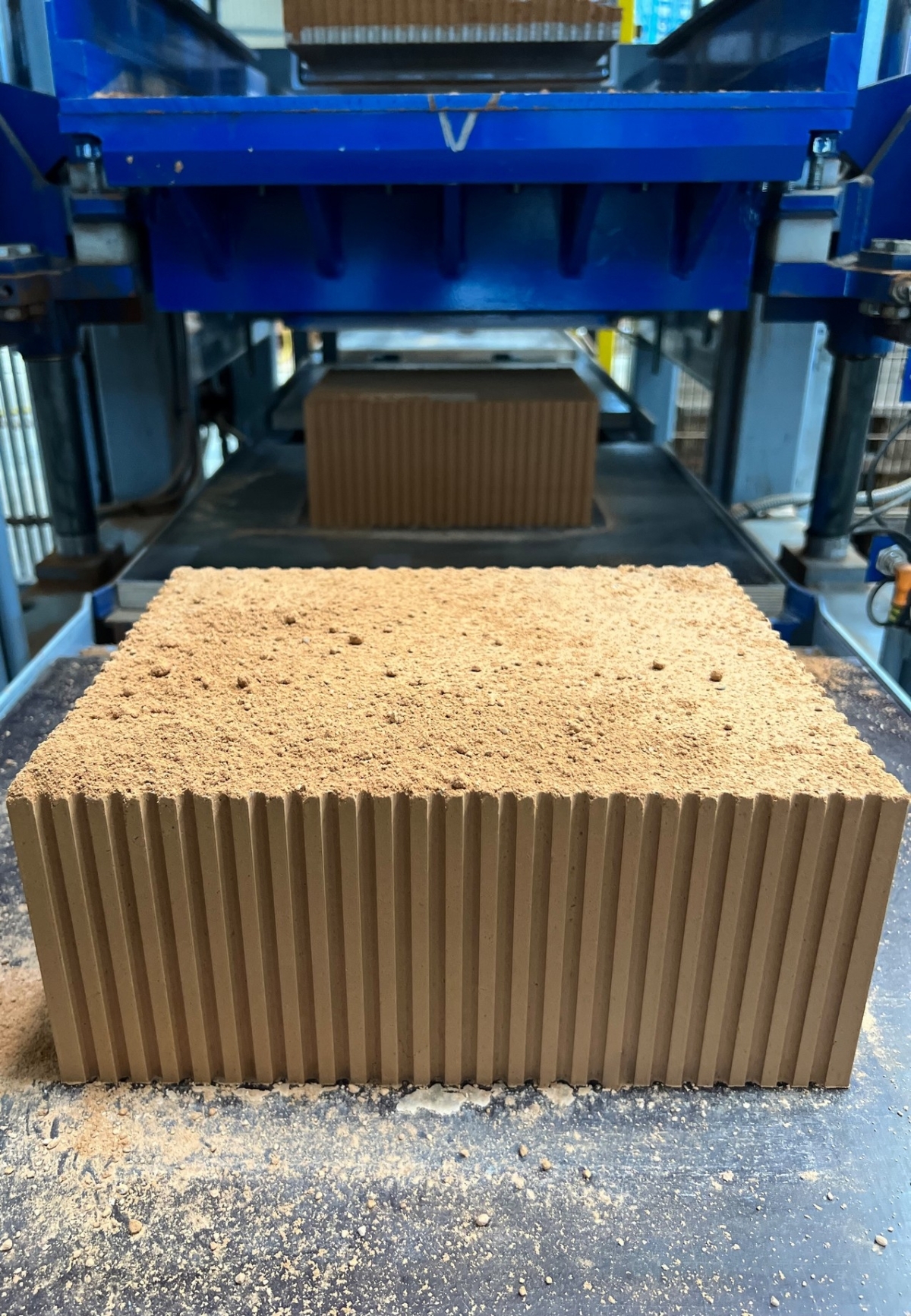
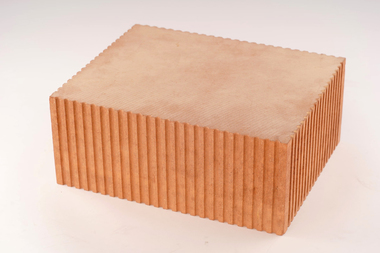
The cold-formed brick developed by the Bavarian brick manufacturer Leipfinger-Bader has received official building code approval Z-17.13-1328 from the German Institute for Building Technology (DIBT). The company announced this in a press release dated May 26. The classification of the cold brick according to EN 771-3, the European standard for concrete masonry units with dense or porous aggregates, is based on the cold manufacturing process, not on the material’s concrete-like nature.
The approval allows the cold brick to be used in a wide variety of applications, such as office and industrial buildings or in residential construction. The product meets key requirements for resource conservation, energy efficiency, and recyclability and is suitable as a building block for QNG-certified buildings. The global warming potential for a wall made of cold-formed concrete blocks, with a thickness of 24 centimeters, is equivalent to 21 kilograms of CO2 equivalents per square meter. Leipfinger-Bader emphasizes that, by being included in the application areas regulated by building codes and technical standards, a recycled building material is now available that—like conventional products—has been proven to meet all necessary standards and can therefore be used without restriction for approved construction purposes.
Stable and Fire-Resistant Recycled Building Material
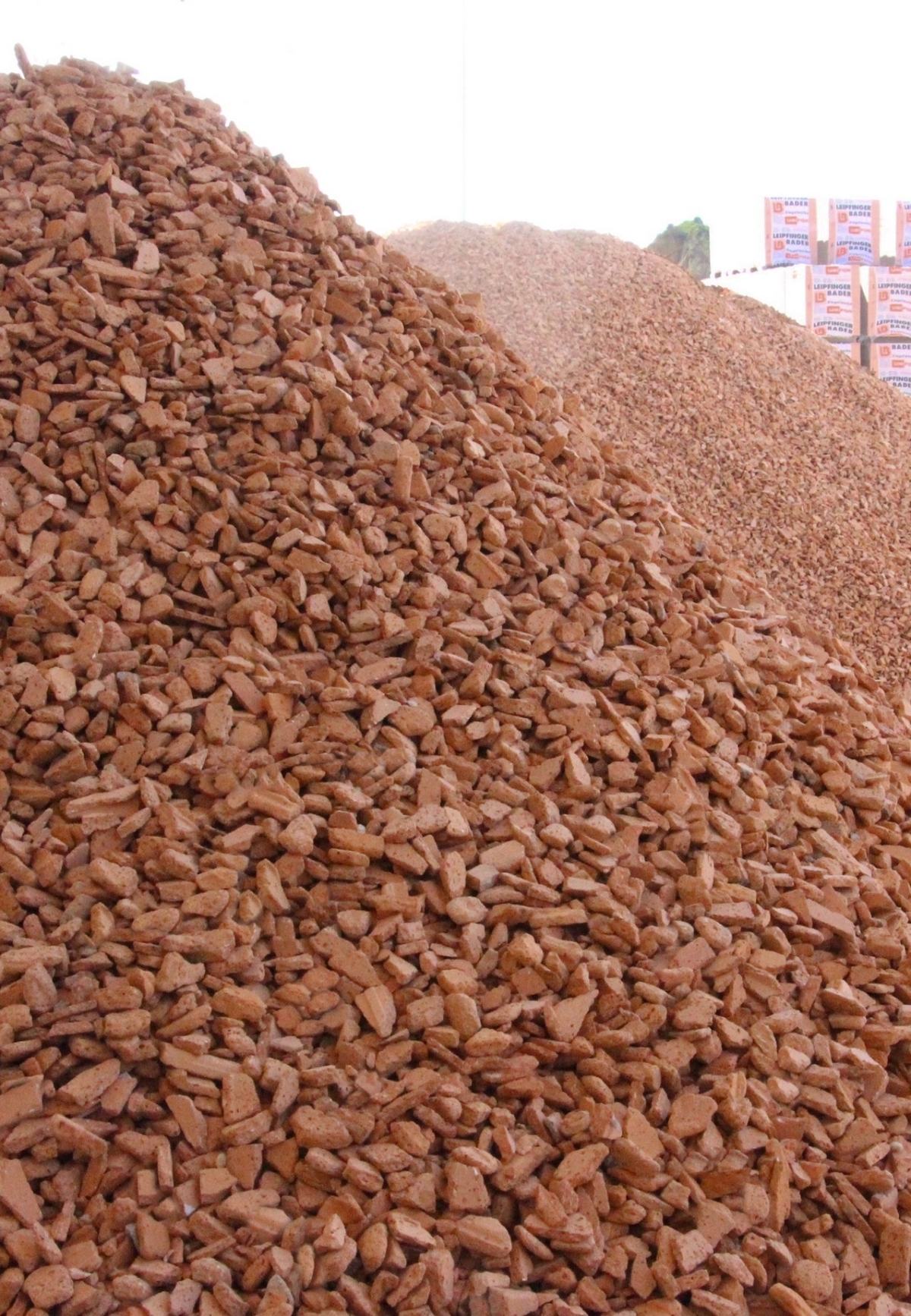
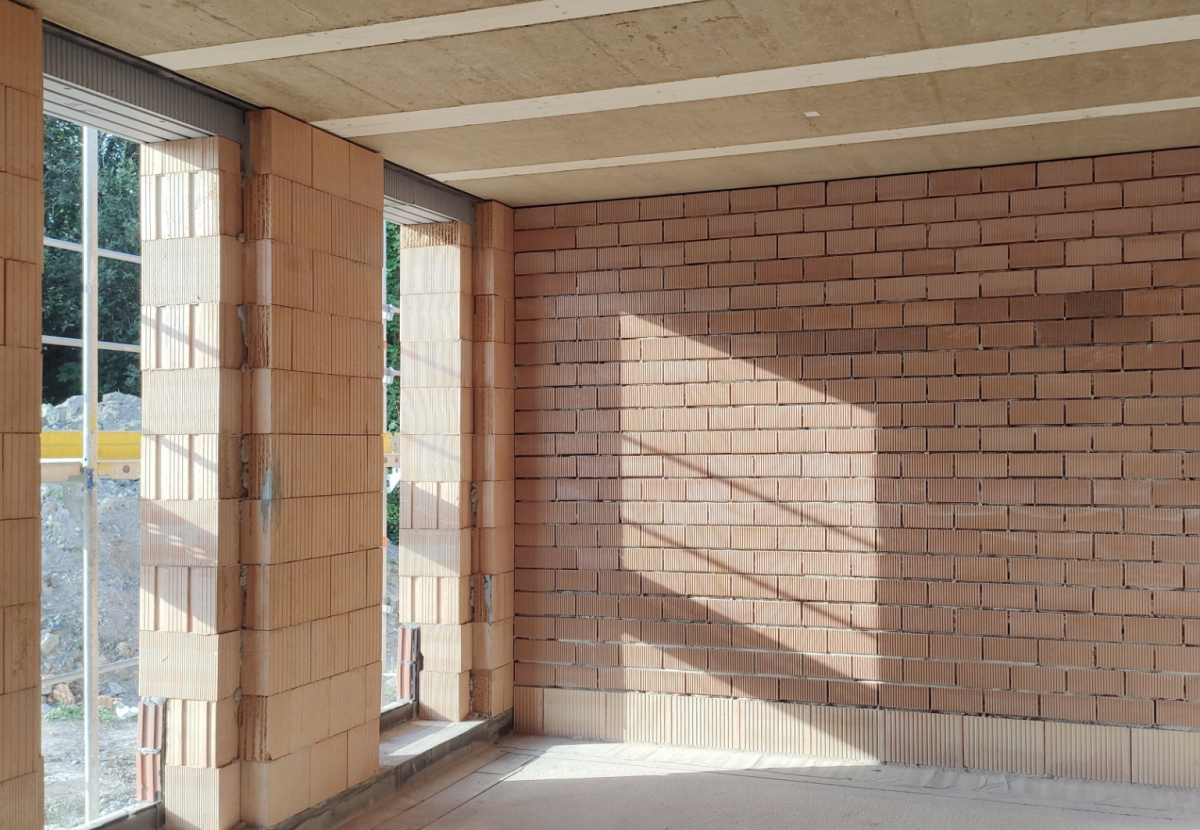
The cold-pressed brick is manufactured from recycled brick scraps—generated during the production process or demolition work—and mineral binders. Cold pressing and air drying result in a building material with high stability and excellent structural properties. The material is now officially approved as plane soid brick and plane solid block in compressive strength classes 6 through 12. With fk values ranging from 3.0 to 4.8 MN/m², it is suitable for load-bearing and partition walls. With a bulk density of 1.60 and 1.80 kg/dm³, the recycled brick offers an effective combination of stability and fire protection. These high bulk density values enable classification into fire resistance classes F 30-A, F 60-A, and F 90-A, making the cold-pressed brick suitable for the construction of fire walls as well. The minimum wall thickness for firewalls is 240 millimeters. A notable feature is its approval for unplastered firewalls, which opens up additional design possibilities in modern masonry construction.
A Marketable Building Material with Potential
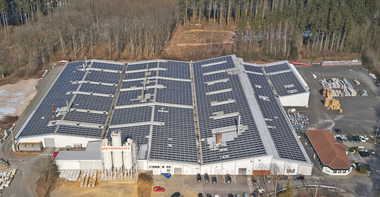
According to Leipfinger-Bader, the cold-pressed brick is not a prototype. The company is capable of manufacturing the building material on an industrial scale and is already successfully marketing it.
In terms of quality, the Bavarian manufacturer sees considerable potential for the cold brick. Due to its manufacturing process and the secondary raw materials used, the building material addresses key market drivers such as the circular economy, resource efficiency, and the reduction of process-related CO2 emissions. This is particularly true for projects where verifiable emission reductions, recycling content, and resource-efficient production are key priorities.
In terms of price, the building material is difficult to categorize. Compared to the Unipor standard brick, the cold brick is about 5 percent more expensive. However, the two bricks are only partially comparable due to differences in dimensions, bulk density, and compressive strength class.
Leipfinger-Bader anticipates that, in the medium term, the production of the cold-pressed brick will become more cost-effective than that of the standard brick due to rising heat and energy prices. However, it will take time for the cold-pressed brick to establish itself as a direct alternative to the standard brick.