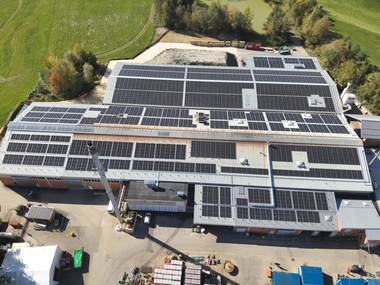




Kick-Off Meeting for Research Project on Brick Firing with Biogenic Porosity Agents
On June 25, 2026, the kick-off meeting was held for the newly launched NiGebZ research project, “Reduction of CO2 Emissions through Targeted Lowering of Peak Firing Temperatures in Brick Firing.” The project leaders, Dipl.-Ing. Daniela Hesky from the Institute for Applied Construction Research in Weimar (IAB) and Dipl.-Ing. Sandra Petereit from the Institute for Brick Research in Essen (IZF), explained the project’s objectives, the chosen approach, and the work packages.
Objectives
The goal of the research project is to develop a nearly CO2-neutral wall building material for load-bearing walls. Energy for the firing process is to be supplied primarily by biogenic porosity agents. Gas burners are to be used only for regulating and adjusting the firing curve.
This goal, the researchers explained, is linked to the initiative to decarbonize the brick industry, as outlined in the Roadmap 2050. The roadmap identifies the use of biogenic porosity agents as one measure alongside the decoupling of kilns and dryers, the use of high-temperature heat pumps, and hydrogen-powered and electric kilns.
The researchers justified the project’s focus on the raw materials side by pointing to the process-related emissions during brick firing. These emissions arise from the use of carbonate-containing clays and can only be avoided by replacing them with and using carbonate-free clays. However, this is only possible at the cost of significantly higher operating expenses, because both the raw material itself and its transportation incur additional costs.
According to the researchers, an alternative way to avoid both process-related emissions and higher raw material costs is to lower the firing temperature below the temperature at which carbonate decomposition occurs. Research projects at the IZF have shown that compressive strengths of 10 MPa—sufficient for load-bearing masonry—can already be achieved at around 600 °C. The researchers speculate that a further reduction in process emissions could be achieved through the use of carbon-free aggregates. Strength-enhancing additives would also be a possibility.
Biogenic Porosity Agents
Biogenic porosity agents are derived from natural, organic sources and can increase the porosity of the final product. They are an environmentally friendly alternative to conventional porosity agents. The researchers presented four categories: solid biomass such as wood and straw; plant residues, agricultural waste such as wood flour, rice husks, and other plant waste; biochar; and alternative biogenic sources: animal materials (e.g., horn meal), algae, and biopolymers.
Carbonate Decomposition
The researchers presented the findings relevant to the project regarding carbonate decomposition. Calcium carbonate and magnesium carbonate decompose primarily between 600 and 900 degrees Celsius. The highest rate of CO2 release occurs at temperatures between 750 and 850 degrees Celsius. The decomposition temperature depends on the heating rate (faster heating leads to higher temperatures) and the CO2 partial pressure in the frit matrix. Decomposition is an endothermic release of CO2, leaving behind calcium oxide and magnesium oxide, respectively. If these porous substances are finely dispersed throughout the mass, this promotes microporosity; if they are present in lumpy form, there is a risk of later lime spalling, depending on the degree of processing.
The researchers emphasize that this carbonate decomposition reaction generates a large amount of CO2 and requires a significant amount of energy.
Objective: Energy Utilization
In contrast, the research project aims to utilize the exothermic energy released by the porosity agents during brick firing for the firing process itself. The exothermic decomposition of the organic porosity agents occurs at temperatures ranging from 300 (sawdust) to 900 (graphite) degrees Celsius.
A Look at Practical Applications
Both the combustion of porosity-enhancing agents and the decomposition of carbonates contribute to gas formation and porosity and play a role in the resulting pore structure and, consequently, the thermal insulation properties of the product. This relationship is well known in practice. For example, vertically perforated bricks (HLZ) contain up to 4 percent total organic carbon (TOC) and up to 25 percent carbonate-containing minerals.
Compressive strength, in turn, depends on the sintering process, which begins at temperatures ranging from 800 to 850 degrees Celsius. The formation of new minerals that occurs during this process—such as feldspars, gehlenite, and diopside—leads to a significant increase in compressive strength.
However, research findings show that brick firing and the formation of new minerals can occur below the temperatures required for carbonate decomposition. Thus, at a firing temperature of just 600 degrees Celsius, bricks can achieve compressive strengths significantly higher than those of aerated concrete (2–8 N/mm² or MPa).
Implications for the Research Project
These preliminary considerations form the framework for the project. The planned peak temperature for the experiments is approximately 600 degrees Celsius. The hypothesis is that the carbonates decompose only partially at these temperatures. This can influence pore size and distribution, strength, and thermal conductivity. This is because carbonate decomposition is a key process for pore formation, strength development, and thermal insulation in vertically perforated bricks. Lowering the firing temperature to approximately 600 °C can significantly alter these processes. This necessitates experimental investigations of material properties when using biogenic porosity agents and lower firing temperatures.
Approach
At the IAB, the combustion of various HLZ composites at different temperatures is to be carried out, along with the determination of bulk density and compressive strength, as well as the characterisation of the HLZ composites (mineralogy, particle size distribution) and the correlation of the results with the development of compressive strength.
At the IZF, various porosity-inducing agents are to be selected and their calorific value determined; furthermore, gas analysis of the porous green bodies is to be carried out, and bulk density, thermal conductivity and compressive strength, as well as moisture expansion, are to be determined.
Based on the findings obtained at the IAB and the IZF, an industrial trial will be conducted to evaluate the resulting structural properties of the brick.
The project work plan calls for nine work packages to address these steps. The last two packages are expected to be of particular interest. In Work Package 8, which is scheduled to begin in the first quarter of 2028, the process engineering concept will be developed. This includes the concept for technical implementation, the development of a raw material matrix comprising suitable raw materials and batch compositions for the production of low-temperature-fired bricks, as well as the definition of requirements for the firing process. Work Package 9 focuses on the presentation and documentation of results. An interim report is expected in the second quarter of 2027, and a final report in the second quarter of 2028.
Zi will report on this.