



Model-based investigation into decarbonisation of the brick industry: Holistic analysis of the decoupling of tunnel kilns and dryers with heat pump integration (MOD-Z)
On 29 January 2026, the kick-off meeting for the IGF project ‘Model-based investigation into the decarbonisation of the brick industry: Holistic analysis of the decoupling of tunnel kilns and dryers with heat pump integration – MOD-Z’ took place. The project (01IF24314N), funded by the Federal Ministry for Economic Affairs and Energy, will run from 1 October 2025 to 30 September 2027. The DLR Institute of Low-Carbon Industrial Processes and the Institute for Brick Research Essen e.V. are participating in the project.
Brief description
The brick industry is faced with the task of converting its existing thermal processes and the associated plant technology to CO2-free technologies. The dryer and tunnel kiln, in which the bricks are dried and fired, are the steps that require the most energy and emit carbon dioxide. Replacing the fuel with carbon-neutral fuels will reduce CO2 emissions, but is very expensive, which will lead to an increase in the product price. It is therefore necessary to increase the thermal efficiency of the current plants in the brick industry and then use carbon-neutral fuels.
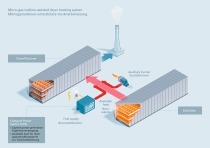
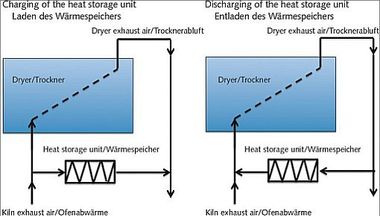
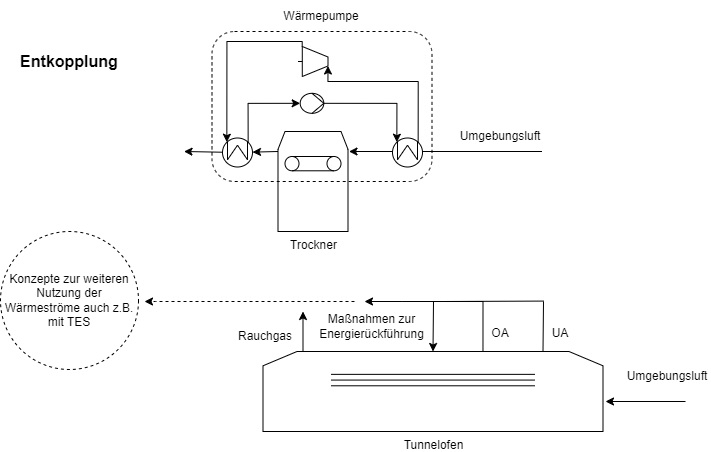
The coupled operation of the tunnel kiln and dryer means that the energy from the cooling zone of the kiln is used in the dryer. At weekends, the dryer is not in operation, so the energy from the tunnel kiln is not used. This project aims to develop various concepts for using the energy from the cooling zone in the tunnel kiln to increase the thermal efficiency of the tunnel kiln. By utilising the energy in the tunnel kiln, the tunnel kiln and dryer are decoupled (»Figure 1), which makes it possible to optimise the two systems separately and thus increase thermal efficiency. This project investigates the effectiveness of heat pumps with the aim of electrifying the drying process. The heat pump is designed to use the moisture from the dryer‘s exhaust air to increase the thermal efficiency of the system. The various concepts for decoupling the tunnel kiln and dryer can be useful for the brick industry, which consists mainly of SMEs, to increase the thermal efficiency of their current plants and ultimately to electrify them.