



Multi-parameter measurement method for determining moisture content in preparation and extrusion
Background and problem
Modern bricks feature complex material mixtures with a wide variety of additives and an innovative production process. During preparation, the raw material components are crushed, mixed and adjusted to a suitable plasticity for shaping. Water plays an important role in all areas of preparation, especially for clay digestion and plasticity regulation. Currently, continuous moisture determination is hardly possible with the existing measurement methods.
Objective
The objective of the project was to enable online moisture measurement for brick production in order to continuously record the moisture in the raw materials independently of density. This should enable uniform plasticity at the extruder and low-texture shaping, reducing breakage and saving drying energy.
Implementation and results
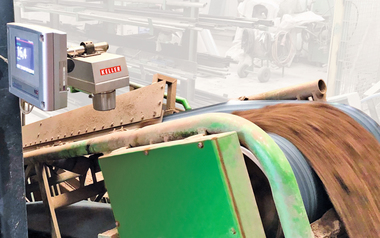
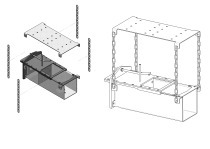
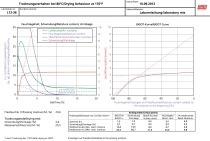
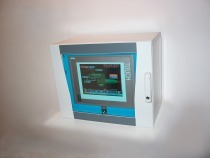
Based on dielectric measurement methods, the fundamentals for the moisture measuring device for inhomogeneous raw materials were developed. For this purpose, sensors for a multi-parameter method were sought that could utilise the spectral properties of permittivity. A broadband determination of permittivity defines the frequency ranges in which the physical influencing factors of density and moisture exhibit their greatest sensitivity independently of each other. Based on these results and the definition of the specific requirements of the brick industry, suitable sensors were to be developed with the aid of simulation tools. Evaluation algorithms for the multi-parameter method were developed. Together with microwave electronics, the sensor and evaluation algorithm were tested in a laboratory setup, calibrations were created and the requirements for the measuring system were checked. A demonstrator tested continuous, online-capable moisture measurement. The project laid the foundations for the final design of a device. However, in subsequent projects, the antenna technology must be further developed in order to achieve representative results.
This is a research project of the Forschungsgemeinschaft der Ziegelindustrie e.V. (FGZ), which was carried out by the Institut für Ziegelforschung Essen e.V. and the Materialforschungs- und -prüfanstalt Weimar (MFPA). The IGF project 20874 BG of the Research Association of the Brick Industry was funded by the Federal Ministry for Economic Affairs and Climate Protection (BMWK) via the AiF as part of the programme for the promotion of industrial joint research (IGF) on the basis of a resolution of the German Bundestag.
The objective of the research project was achieved.