



The Brickworks’ Hidden Data Treasure: How Plant Data Becomes a Competitive Advantage
LINGL SOLEAD and Letabo Are Laying the Groundwork for the Brickworks of Tomorrow


Brickworks generate enormous amounts of plant and process data every day. A treasure trove of data that, until now, has often remained untapped. Yet the intelligent linking and analysis of existing information offers considerable potential: it reveals complex interrelationships that are barely discernible in day-to-day operations. This creates the conditions for targeting energy consumption optimization, identifying deviations early on, and controlling production processes with greater precision.
Two Areas of Expertise, One Goal
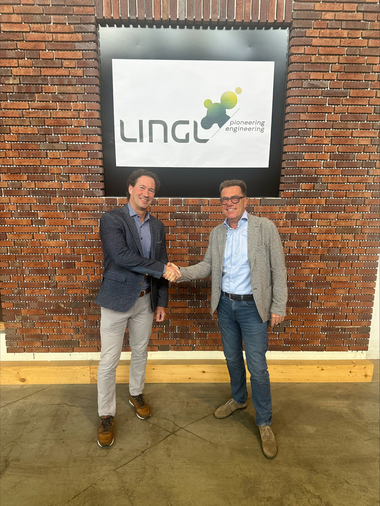
This is precisely where LINGL SOLEAD and Letabo GmbH come into play. Together, they lay the foundation for systematically harnessing relevant operational data and deriving sound, practical decision-making insights from it.
LINGL SOLEAD brings over 80 years of process and plant expertise in the brick industry to the table. The company understands the critical interrelationships in the production process and knows which factors are decisive for product quality, efficiency, and plant performance.
Letabo GmbH complements this knowledge with expertise in software development, data processing, and artificial intelligence.
Today, the key challenge lies not in mere data collection itself, but rather in generating reliable recommendations for plant operations based on that data. By combining machine and process know-how with modern AI technology, a system is created that structures the vast amounts of data and continuously provides actionable insights for operations.
How Valuable Insights Are Derived from Data
It all starts with a solid data foundation. In many plants, the necessary information is already available in the machine control systems and higher-level systems. Where relevant metrics are missing, LINGL SOLEAD specifically supplements the data foundation with modern sensor technology. Step by step, this creates full transparency regarding energy flows, plant conditions, and process sequences.
This is the foundation upon which Letabo’s AI plant manager builds. The software analyzes and links production, energy, and operational data, presenting the resulting insights in a structured manner.
This provides managers with a reliable foundation for day-to-day operations. The AI plant manager centrally consolidates process knowledge, enables the early detection of patterns and deviations, and documents them in a traceable manner. For plant managers, this creates a digital memory and early-warning system in one.
On this basis, concrete measures to increase efficiency can be derived, and optimization potential can be evaluated as part of a continuous improvement process.
The concrete added value for brickworks
Intelligently manage energy: By linking production data, PV yields, market prices, and process requirements, the AI Operations Manager identifies the most energy- and cost-effective operating mode. Energy consumption, peak loads, and production planning are thus optimally coordinated.
Transparently managing emissions and CO2 costs: Continuous data analysis makes the production process’s environmental footprint transparent. Carbon footprints can be determined proactively, CO2 costs can be presented more precisely, and future demand for emission allowances can be reliably calculated.
Avoid unplanned downtime (Predictive Maintenance): The AI plant manager detects characteristic wear patterns early on. Maintenance measures can be planned proactively, rather than reacting only after failures occur.
The plant’s second brain: Process expertise is embedded within the company independently of individual employees. Insights from various operating conditions are centrally and permanently available to the entire team.
Low-risk integration path: The AI plant manager operates as a “read-only” system and does not directly intervene in plant control. This enables a step-by-step digital transformation without interfering with existing control and automation systems.
Why Taking Action Now Pays Off
Rising energy costs, growing efficiency demands, and competition from alternative building materials are increasing pressure on the brick industry. Data-driven decisions are a key component in making production processes economically viable and future-proof.
The implementation is gradual and practical
LINGL SOLEAD works with the operator to analyze the existing plant technology and develop a tailor-made concept to make the relevant information usable throughout the value chain.
Based on this data, the AI plant manager is implemented and adapted to the specific requirements of the plant.
Already Tested in Practice
The first brickworks are already using the joint solution on individual machines or across entire production areas. LINGL SOLEAD is now gradually expanding its user base and, together with its customers, gaining additional practical experience and valuable application knowledge. As practical experience grows, the system is being refined and adapted to new use cases in the brick industry as well as in related sectors.
LINGL SOLEAD and Letabo are actively supporting brickworks on their journey toward data-driven production and look forward to professional exchanges with the industry.