



Clinker, wood, concrete, that‘s it - Training center in Gonichem by De Zwarte Hond and Deppe Brick
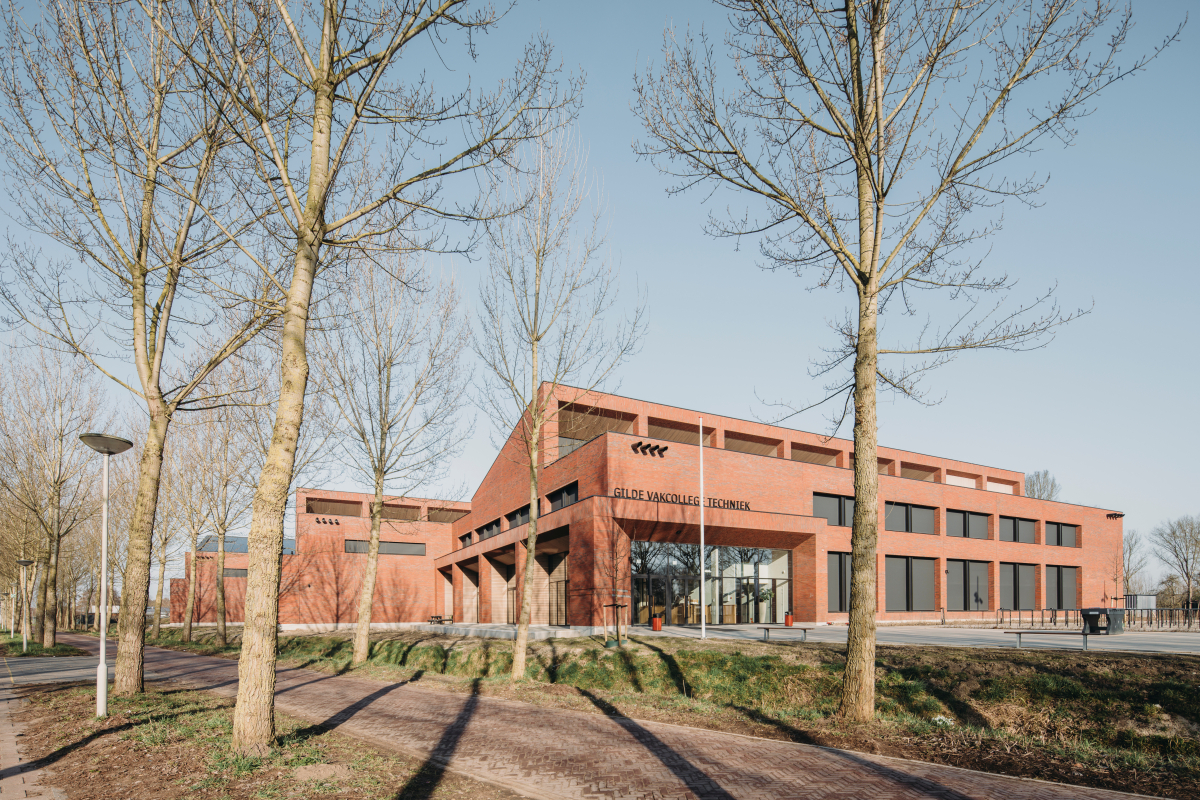

The new Het Gilde Vakcollege Techniek in Gornichem, based on a design by De Zwarte Hond, offers a modern and sustainable learning environment. What‘s more, it presents itself as a learning object. From visible technical installations to elaborately crafted masonry, the building‘s design stimulates the imagination of students and serves as inspiration for the craftsmen and women of the future. Last but not least, the large-volume building impressively conveys awareness and understanding of practical vocational training to the outside world through its openable transparent facade surfaces.
Technical, but personal
With an area of around 10,000 square meters and space for almost 800 students, Het Gilde Vakcollege Techniek is the largest school for lower and middle secondary vocational education (VMBO) in the Netherlands. In this unique learning environment, the focus is on practical instruction in the fields of installation, electrical and metal technology, as well as transportation, construction, housing, and interior design. And although the new educational campus provides the necessary technical working environment, there is a personal atmosphere in which young people learn not only for their careers, but also for life. Direct contact with the business world is promoted by the “WeTech” and “CVO-AV” foundations, the latter of which is located in the building itself.
The rooms for practical instruction are located on the ground floor and are furnished as workspaces that closely resemble everyday working life. Each of these rooms can be connected to the outside via transparent facade elements that can be opened. The upper floor houses the offices and rooms for theoretical instruction, which are more enclosed in character to promote concentration. At the same time, the organization of the room layout along a centrally located corridor supports the impression of an open and transparent building with a friendly atmosphere, which is reinforced by the high ceilings and the unobstructed view of the shed roof structure above.
A large building, but on a human scale
The three rectangular structures were offset from each other but integrated into the existing campus in Gornichem-Nord with a common connecting axis. By deliberately positioning the building volumes, De Zwarte Hond has succeeded in giving this large building a human scale and integrating it harmoniously into the existing structure. Three shed roofs give the large-scale structures a striking geometry, while also ensuring a light-flooded interior and providing sufficient space for PV modules, which enable the building to be operated energy self-sufficiently. At the same time, the industrial character of the roofs refers to the technical learning and working environment inside.
The interior, which follows a clear vertical stratification, is also visible from the outside. The practice rooms on the ground floor open up via large-format transparent surfaces not only to the inside but also to the outside, allowing them to connect effortlessly with the outdoor space. On the upper floor, however, the glass surfaces are significantly smaller, both inward and outward, in order to provide the necessary peace and concentration in the theory rooms. The area of the shed roofs is thus once again flooded with light.
Monolithic and yet so delicate
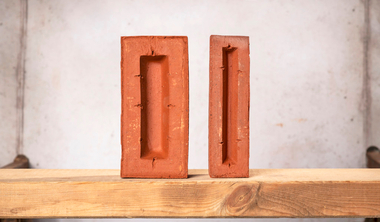
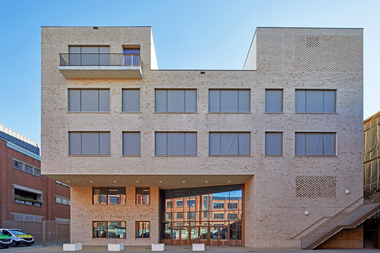
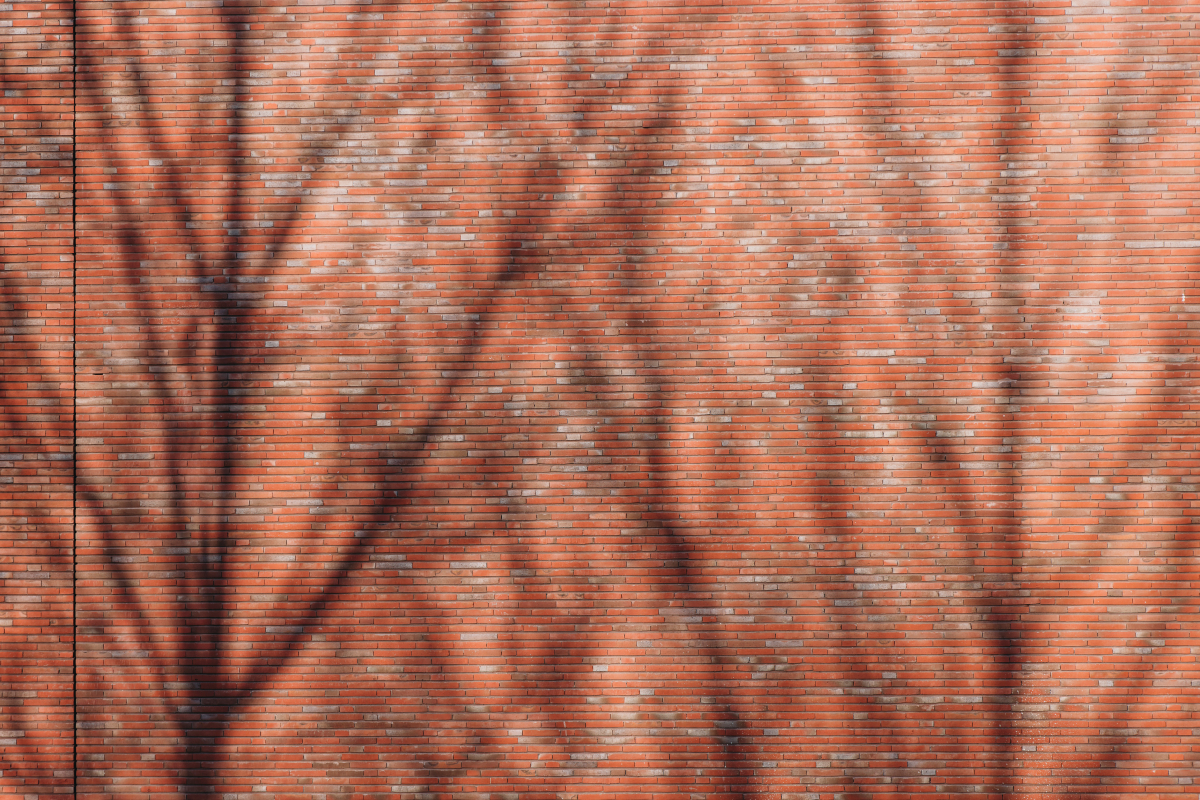
The monumental appearance is supported by the solid masonry with which the architects at De Zwarte Hond clad the training center. “The violet-nuanced facades create the desired industrial charm,” explains Bart van Kampen, partner at De Zwarte Hond. “We also chose clinker as the facade material because it gave us the opportunity to showcase our craftsmanship directly on the building,” adds van Kampen. The clinker manufacturer Deppe Backstein developed the 1670ws water-struck clinker specifically for this project. The special format measures 240 x 90 x 40 mm and was laid very tightly, without any visible bed joints or butt joints. The result is a calm, monolithic surface effect, but with a textile-like appearance, in which the brick itself becomes a filigree structure. “We always find working with De Zwarte Hond very inspiring, as we are able to develop and produce special formats or colors for almost every one of their projects,” says Dr. Dirk Deppe, Managing Director of Deppe Backstein. De Zwarte Hond and Deppe Backstein have already worked together to create particularly expressive facades for the new “Het Element” school building in Amersfoort.