



Danish brick manufacturer Matzen Tegl investigates carbon capture and reuse
Since July 2025, a new limit for the climate impact of building materials has been in force in Denmark. No more than 6.7 kilograms of CO2 per square metre may be generated for a single-family home. In 2029, this limit will be reduced to 5.4 kilograms. These requirements prompted Danish brick manufacturer Matzen Tegl to launch the research project Valgreen to develop and demonstrate technologies for capturing CO2 directly from brick production, storing it underground or using it in value-adding processes.
In addition to the Danish brick manufacturer, the Technical University of Denmark and the companies Topsøe, Rambøll, Force, Cybernetica and Pentair/Union Engineering are also involved in the project running from August 2025 to October 2028. CO2 capture will be tested and demonstrated at Gråsten Teglværk, one of Matzen Tegl’s two plants. The Energy Technology Development and Demonstration Programme (EUDP) and Green Labs DK (GLDK) are providing 31 million Danish kroner funding.
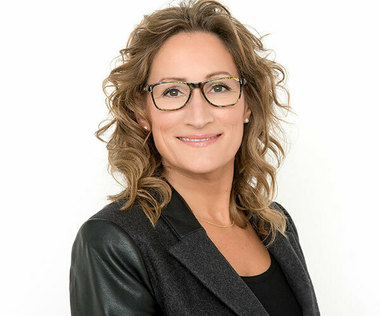
Project manager Jacob H. Bendtsen, a DGNB consultant who has been working on sustainability for 15 years – including at Matzen Tegl – explained the project in more detail in an interview with the Danish Brick Association:
‘We are already doing a great deal in the brick industry to reduce emissions from our production. By switching to biogas, optimising production and developing new types of bricks, we as an industry have taken major steps in the right and more climate-friendly direction. But the new CO2 requirements that came into force on 1 July 2025 require a change of gear that is far greater than we are used to.’
Over the next three years, Bendtsen will lead a team of specialists and researchers who, in collaboration with Matzen Tegl’s production facility in Gråsten, will test whether this gear change lies precisely in CO2 capture.
Strength and quality must be maintained
‘We have participated in other pilot projects where we have fired bricks using microwave and electric kilns, for example, but this compromises the strength and quality of the bricks. And that is simply not acceptable. We don’t want to compromise on the properties that Danish bricks have today. That’s why we need to reduce the CO2emissions from the gas we currently use to heat the kilns. I believe this is the right solution,’ says Jacob H. Bendtsen.
The project will run from August 2025 to October 2028 and has an ambitious goal: to produce bricks with a carbon footprint of less than 10 kilograms per tonne – a reduction of over 94 per cent compared to the 177 kilograms per tonne currently emitted at the Gråsten Teglværk site.
From flue gas to resource
The first year of the project will be spent analysing and cleaning the flue gas so that the CO2 capture plant can function optimally. Among other things, the flue gas contains fluorine, which can cause unnecessary wear on the heat exchangers used for CO2 capture itself, thereby destroying the process.
‘In other words, we need to generate a flue gas stream that the CO2 capture plant can work with. The CO2 capture plant itself will then be developed, while Topsøe, which is involved in the project, will investigate how we can convert the captured CO2 into hydrogen or other products. The dream is to convert it into something relevant and valuable instead of burying it in the North Sea. If everything goes according to plan, the excess heat from CO2 capture can be sold to the local district heating network and the water can be reused in production. In this way, the project will be both a climatic and an economic gain,‘ explains Jacob H. Bendtsen.
When the project ends in October 2028, Jacob H. Bendtsen, project manager at Matzen Tegl, has a clear wish for the outcome: ’Then we will have a brick in our hands that is of the same high quality as the one we produce today. But we will also have a brick that is virtually CO2-neutral if we simultaneously succeed in changing the law so that we can remove the energy sold from CO2 capture from our EPDs.’
No one wants to pay more for sustainability
CO2 capture is a complex and investment-intensive solution. Does this mean that Danes will have to get used to paying more for CO2-neutral bricks in the future?
No, says Jacob H. Bendtsen quite clearly.
‘When we as an industry started buying biogas certificates as a more sustainable but more expensive alternative to natural gas, the price of bricks made from biogas naturally rose. But no one was willing to pay a premium for the more environmentally friendly bricks. So we decided to fire with biogas, but at the same price as the original bricks. We accepted the loss – those were the conditions. And I don’t think that will change,‘ says Jacob H. Bendtsen, continuing:
’That’s exactly why this project is so interesting, because we assume that CO2 capture will enable us to reduce our operating costs, as we can both save energy and sell the waste heat as district heating, for example. This means that with CO2 capture, we will hopefully be able to maintain the same price structure – or, in the best case scenario, even reduce it. Because unfortunately, no one wants to pay more for sustainability.’