



Danske Tegl publishes new roadmap for green transition in brick construction
What is the potential CO2 saving if, for example, the entire Danish brick industry manufactures narrower bricks or converts its energy consumption from production to clean electricity from wind energy?
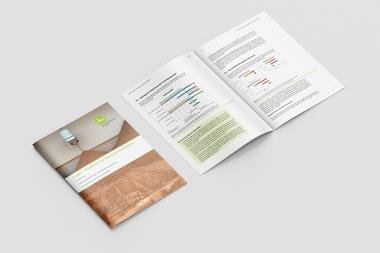
A new report from the Danish Technological Institute, commissioned by Danske Tegl, the Danish brick makers’ and mortar producers’ association, now attempts to put a figure on this. It was published 17 June 2025.
Danish brick and mortar manufacturers have been working for many years to reduce the industry’s total CO2 emissions. With the new roadmap, they now have more knowledge about how the use of bricks can be further optimised in the effort to become completely climate neutral.
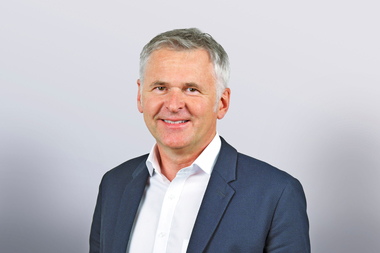
Ulf Minke is a business manager at the Danish Technological Institute and part of the team of experts behind the calculations in Danske Tegl’s ‘Roadmap for green transition in brick construction’.
‘Specifically, we have tried to calculate a number of scenarios for the total production of bricks and mortar in Denmark. These scenarios show the various options available to the brick industry for moving in a more climate-sustainable direction. These could include new types of stone, a reduction in the cement content of mortar, or a switch to other forms of energy for brick production,’ explains Ulf Minke.
Twelve scenarios have been calculated
In the ‘Roadmap for green transition in brick construction’, input from the entire value chain has been used to identify 12 relevant opportunities for reducing the industry’s total CO2 emissions.
‘We then looked at each initiative from the following perspective: If we imagine that this single initiative is rolled out across the entire brick industry, what climate impact will it have once it is fully implemented – measured against emissions in 2021, which serves as our baseline? These calculations provide a kind of catalogue that indicates which initiatives the industry would benefit from looking into further in terms of reducing the climate footprint of brick production,’ says Ulf Minke.
He emphasises that the new roadmap should be seen as calculations that show the potential, and not as a report that draws two lines under the matter to mark results.
The entire value chain is included
Prior to the calculations, the Danish Technological Institute conducted a total of 15 interviews with representatives from across the construction value chain – from consulting engineers to bricklayers, all of whom contributed different perspectives on brick as a material.
In addition, a group of experts from the Danish Technological Institute and the Technical Committee of Danske Tegl provided input on which scenarios could be relevant and meaningful to calculate in relation to estimated CO2 reduction. A total of 12 initiatives have been compiled and calculated in the new roadmap.
According to Ulf Minke, there are several interesting results that the entire Danish brick and mortar industry would do well to take a closer look at:
‘Our calculations show that, under the assumptions made, there is significant potential for CO2 savings by switching entirely to biogas. The same applies if the entire brick industry switches to electricity. The challenge is that this can be very difficult in practice,’ says Ulf Minke, continuing:
‘Therefore, our calculations should primarily be seen as a starting point for further discussions and calculations in the brick industry when it comes to the economics, time perspective and feasibility of the individual scenarios, before the industry as a whole launches new initiatives to reduce its overall climate footprint.’