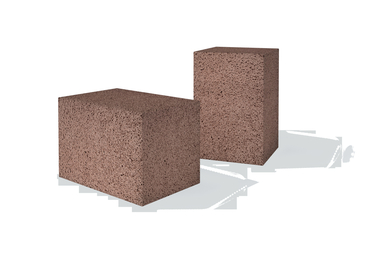




Geiger Group receives approval for ceramic concrete additive produced by Hörl & Hartmann
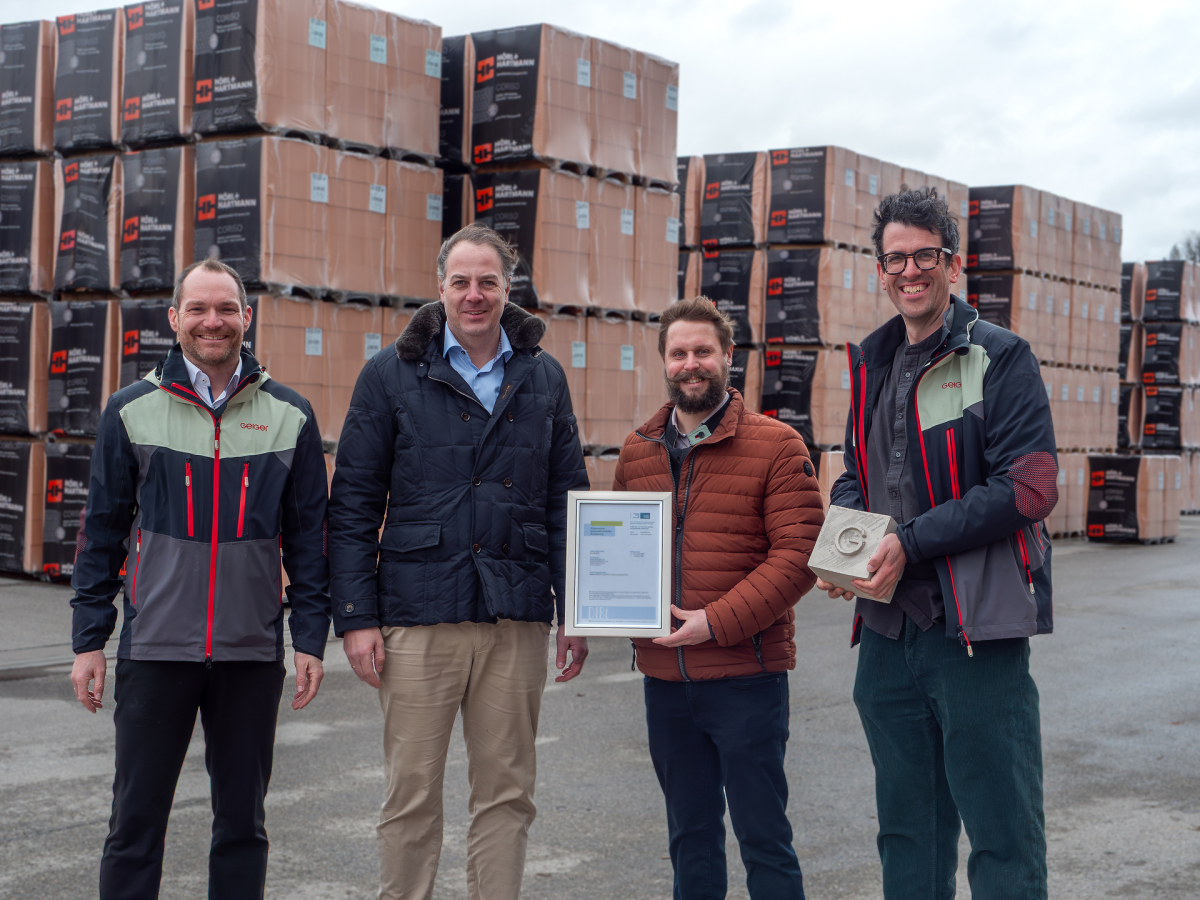
According to a press release issued by the company on 19 February 2026, the Geiger Group has received official approval from the German Institute for Building Technology (DIBt) for its newly developed concrete additive Concrelat. The German brick manufacturer Hörl & Hartmann GmbH & Co. KG was a partner in this development.
Concrelat is brick fines that is produced during the surface grinding of backing bricks at the Hörl & Hartmann Ziegeltechnik GmbH & Co. KG manufacturing plant in Dachau. According to the approval notice, this powder may be produced and used as a type II concrete additive for the manufacture of concrete in accordance with DIN 1045-2.
The use of Concrelat can reduce the cement content in concrete by up to 20 percent. According to Geiger‘s press release, this can save valuable primary raw materials and significantly reduce CO2 emissions. Its performance has been externally tested by MPA Stuttgart and the German Institute for Building Physics. The results confirm that Concrelat can be used as a fully-fledged concrete additive.
With this approval, Geiger continues, a ceramic waste product is given a new function in concrete and closes a previously unused material cycle between the brick and concrete industries. Concrelat is already being used in the Geiger Group‘s ready-mixed concrete plants.
The company views this step very positively: “With Concrelat, the Geiger Group is once again demonstrating how the circular economy can be successfully implemented in the construction sector: An existing material is reused directly, cement is partially replaced, and regional value chains are strengthened. Short distances, close cooperation with the brick industry and direct integration into existing processes clearly demonstrate how a circular building material works in practice.“
“We are proud that the close and trusting cooperation with the Geiger Group has led to this successful approval. It underlines how much potential there is in joint innovation when companies think beyond industry boundaries,” explains Hörl & Hartmann on its website.