



Grothe Rohstoffe increases ceramic intelligence within the company
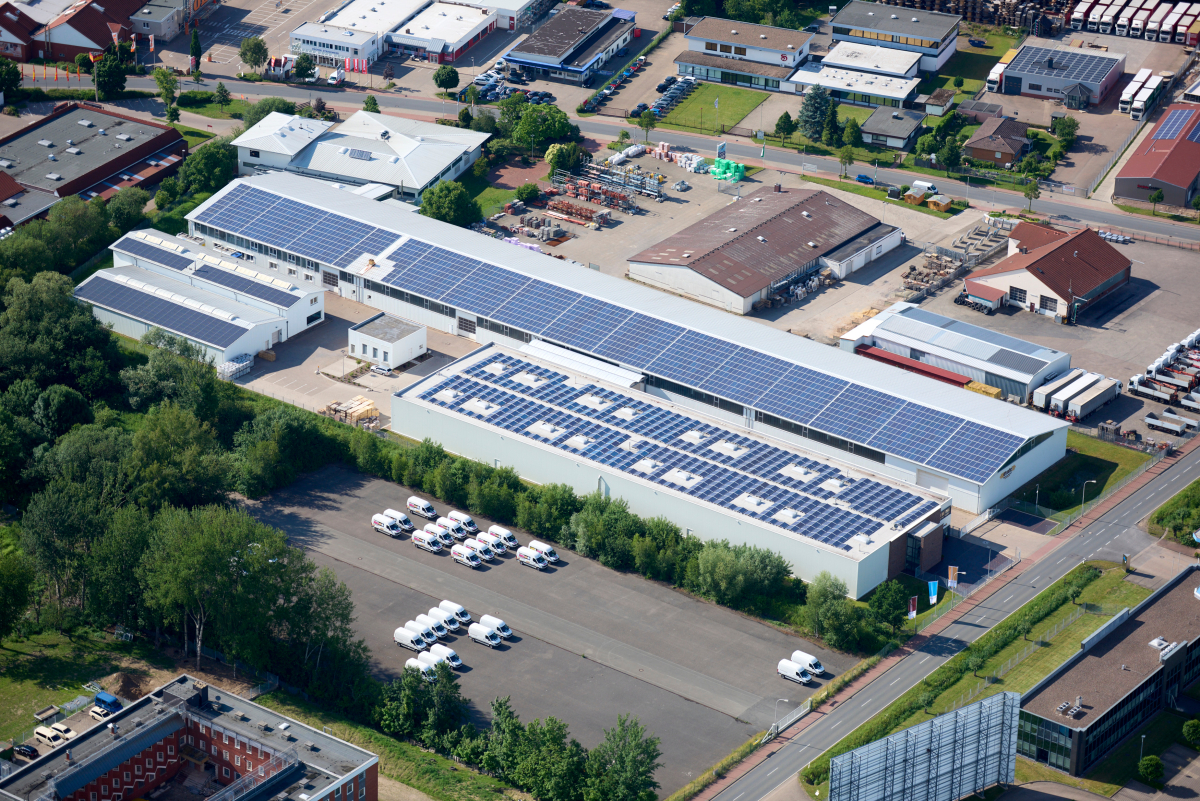

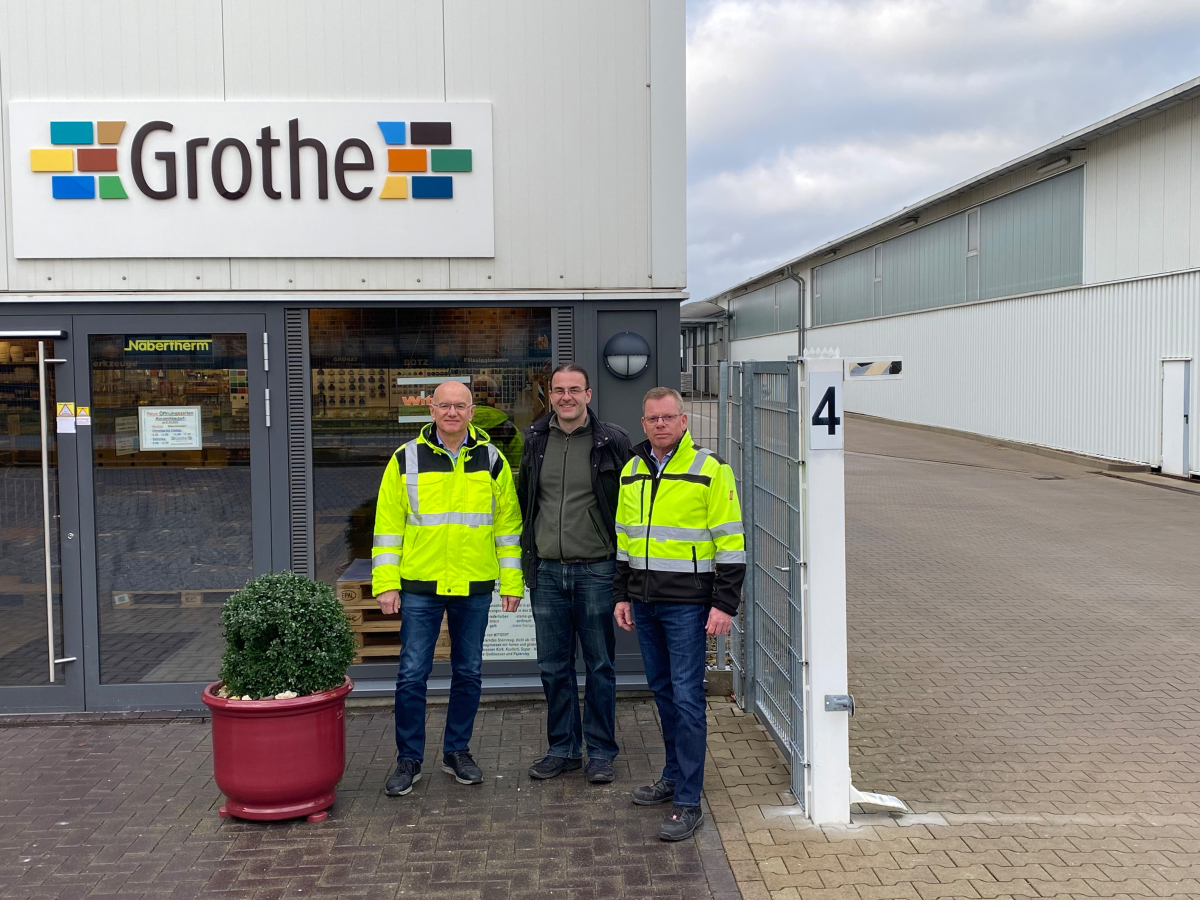

The family-owned German company Grothe Rohstoffe in Bückeburg has been supplying heavy clay companies with engobes and glazes for decades. Since 1 January 2026, managing owner Uwe Grothe has been supported by a second managing director with more than 30 years of professional experience in brick manufacturing: Ralf Borrmann, former technical managing director at a leading heavy clay manufacturer for many years and a member and chairman of the Roof Tile Committee and the Facing Brick & Clinker Committee of the Federal Association of the German Brick Industry (BVZi). ZI Ziegelindustrie International travelled to the Schaumburg region to talk to both of them. In the interview, you will find out, among other things, why they both took this step and why it is worth keeping old files.
Transparency note: Ralf Borrmann is a member of the ZI advisory board.
About the company Grothe Rohstoffe
Who founded the company in which year?
Uwe Grothe (UG): The company was founded by my grandfather, Bruno Grothe, in 1946. My father, Martin Grothe, took over the business in 1966. I joined the company in 1979 after studying ceramics in Höhr-Grenzhausen.
How did your grandfather come to take this step?
UG: He worked as a salesman for a paint supplier in Hannover. He sold the company’s products, mineral paints, throughout Europe. When the company had to close, he took over the business and moved it to Bückeburg, where he had previously found love. Back then, in 1946, it was still purely a trading company for ceramic raw materials. Engobes and glazes were added later.
When did the ceramic paint business start?
UG: That was in the early 1970s. For Grothe, the raw materials trade lost importance as suppliers increasingly took care of distribution themselves. My father started to develop his own products, such as REDOX® glazes. In 1972, that was something special. Some customers in the area tried them out. A clinker manufacturer was enthusiastic because it allowed him to expand his colour palette with simple means. This positive reception continued. All the heavy clay companies here in the region followed suit. However, only in the clinker sector.
When did engobes come into the picture?
UG: When I returned to the family business after completing my studies, we entered the engobe market as a new player. There was constant demand. In a lengthy process, we were able to position ourselves among established engobe manufacturers with the development of ENGOSYN® special engobes for roof tiles and win renowned roof tile manufacturers as customers. The ENGOSYN® special engobes were followed by the GRONAT® glazes. Both are still the best-selling products today. Fortunately, we had enough time before the fall of the Berlin Wall to establish and expand these business areas.
This development is also the reason why I stayed with the company. My father did not want to share the extensive ceramic expertise that the company had accumulated during this time with outside workers. This expertise was to remain in the family and be developed further. I have continued to do so to this day.
What happened after the division of Germany ended?
UG: Market expansion was a challenge, but we had a huge advantage. In the new federal states, there were many old brickworks that had been my grandfather’s customers in the period after the end of the war. The border had completely severed these contacts, but he had kept a travel file with all the locations. My father gradually visited these factories after the fall of the Berlin Wall. He was welcomed with open arms, in some cases by my grandfather’s old contacts. Some of these contacts still exist today.
That’s why we were immediately involved when investments were made in old and new factories in the new federal states and new engobes were needed. We developed some of the engobes from the outset while the factories were being built and were sometimes able to deliver the first colours before the kilns were even up and running.
↓
About Ralf Borrmann
Let’s remain in the past for now. Mr Borrmann, what is your background?
Ralf Borrmann (RB): I studied process engineering – ceramics/glass at the TU Bergakademie Freiberg from 1988 to 1993. The fall of the Berlin Wall was a stroke of luck for me. Otherwise, I would not have gotten my first job due to the limited opportunities for engineers in the GDR. I worked as a consultant and measurement technician at an environmental institute. For two years, I was at a different company every day, familiarising myself with their respective products and processes in order to prepare the process and operating descriptions, and I learned a lot in the process.
How did you find your way back to ceramics?
RB: I wanted to go back. Another Freiberg graduate, Dr. Lothar Schyia, who was very active in the Nordostverband (Brick Industry’s North-East Trade Association) and helped other Bergakademie alumni find jobs in ceramics, helped me. Through his mediation, I started working for the heavy clay company Eder. Together with Walter Eder and his team, I helped plan, build and commission the then new brickworks in Freital, Saxony, and managed it for a few years. It was an exciting and very instructive time. I did everything myself and operated every machine, every wheel loader, kiln and dryer.
Did you stay in the brick industry after that?
RB: Yes, for over 30 years in various positions. The four years at Erlus as plant manager and the last 19 years as technical director at Röben were particularly interesting. I have been with Grothe since 1 April 2025.
UG: I also know Dr. Schyia, who convinced me to join the North-East Trade Association after reunification. That was our open door to the old and new plants in the east.
RB: We also met at an association event many years ago. In Thuringian Mühlhausen ...
UG: ... we drank beer together at the Brauhaus zum Löwen.
How did you two finally get together?
RB: We kept running into each other and have been friends for many years. At Erlus and Röben, I was a long-standing customer of the Grothe company. The collaboration was always very trusting and professional, clearly separate from our personal relationship. The fact that I can now support here is a stroke of luck for both of us. There is a great team here and an approach that is always solution-oriented. Uwe Grothe and I also follow the same principle, leading on an equal footing. I am happy to be here.
What motivated you to make this change?
RB: For me, it’s another exciting challenge to switch from the customer side to the supplier side. I’ve known the company very well for a long time, as well as the location and some of the application engineers who used to work for my employers on site. At Röben, I was personally involved in most of the product developments.
I have always been impressed by Grothe’s cleanliness, orderliness and structured way of working. Serving so many customers and processing so many raw materials only works with a systematic approach. As I am also very structured myself, it is an absolute bonus for me that I was able to join the company and realise my potential once again. That is why my wife and I decided to move here from Oldenburg. A new start at the age of 58.
Customised work for the customer
Thank you very much for these insights. Back to the present and the company. Where outside Germany does Grothe have customers?
UG: We actually deliver worldwide. We have always had good contacts in Western Europe, where bricks are manufactured, in Belgium, the Netherlands, France, Spain and Portugal. We are also active in Denmark and Finland. With the opening up of Eastern Europe in the early 1990s, brick manufacturers in Poland, Czechia, Hungary, Croatia and the rest of Eastern Europe became good customers and remain so to this day. We also have customers in the USA, Asia and Australia.
Do you have representatives abroad?
UG: We have representatives in Western European markets who maintain contact with customers. However, we have to provide technical support from Bückeburg because the product we sell requires intensive support. That is why we carry out the initial firing tests in the laboratory and, if necessary, send a technician to supervise the application technology on site.
Do you develop new colours for each customer?
RB: Every colour for our customers is developed in-house. Nothing can be standardised or transferred. Every shade and every kiln is different.
We carry out tests with customer clay bodies in Bückeburg, apply the material and also fire at the customer’s firing temperatures. However, these tests cannot completely replicate the actual conditions at the customer’s site. That’s why the colours always have to be tested in the customer’s production facility. After the initial development at our premises, we take the material to the customer and carry out small-scale trials, then larger trials and finally large-scale operational trials. If these are successful, we can deliver. It’s all very time-consuming.
UG: It can take a whole year to get a colour ready for production.
Do customers come to you with colour requests?
UG: Yes, but of course we also have our own ideas. We don’t just ask what do you need, we also say, we have something for you, try it out. We have a different and more comprehensive overview of the entire market and can see where which colours are interesting.
RB: We serve different target groups and applications for our customers. These include architects and mainly commercial construction, then single-family home construction, where certain colours are used, and roof tiles, which differ from facing bricks. There is a lot of movement in the facade sector and architects come up with unusual ideas. In commercial construction, we often encounter one-off projects where a development is used for just one property. In single-family home construction, a particular clinker brick is used in several projects, for example, if it is sold by a prefabricated house manufacturer or offered by the brick manufacturer.
Green transformation
What about the transition to climate neutrality at Grothe?
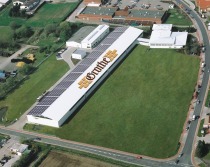
RB: As a company and supplier, we try to work in the most environmentally friendly way possible. We make sure that the raw materials we purchase comply with relevant regulations such as REACH (Registration, Evaluation, Authorisation and Restriction of Chemicals) and that we provide our customers with solutions that are accepted by both their staff and their customers. And we produce in an environmentally friendly way ourselves. We achieve this on the one hand because we only mix dry powder here at our production site. The environmental impact only occurs when the brickmaker uses the paint, and it is very low as the coating is only a few micrometres thick. On the other hand, thanks to the large PV system on the roof, we can supply ourselves with electricity.
That sounds as if you are already operating in a climate-neutral manner?
RB: When the sun is shining, we can produce in an almost climate-neutral manner. To demonstrate this to ourselves and our customers, we are currently working on a life cycle assessment. We are using a model calculation as a means to take only our manufacturing process into account. This is because, with the many different recipes and raw materials we use, we cannot include individual cases. Nevertheless, the assessment is a very complex process.
The assessment is also important for our customers, as they need the information it contains for their own EPDs.
Can Grothe help its customers to produce in a more climate-neutral way?
RB: One example is coal firing in the clinker industry. Due to the air movement in the kiln, the coal filling was rarely completely precise and the marks on the bricks from different batches did not always match. Grothe has developed a granulate that can be applied to achieve the same effect as coal firing. The application of the granulate to the column and the firing result are so good that it is possible to dispense with coal firing and thus with the use of coal. As a side effect, there are fewer emissions from coal.
Handover planned?
Mr Borrmann, will you be taking over the business?
RB: We have decided that I will support Uwe Grothe. He has been with the company for 45 years and knows every customer and every raw material. I wouldn’t want to miss out on this wealth of experience. We sit opposite each other in the office and get on very well. I can ask him anything at any time.
UG: Ralf Borrmann will gradually take centre stage while I slowly hand over tasks. I can do this with a clear conscience because we are on the same wavelength. I know that what I hand over will be continued in exactly the same way, if not better. A handover is not planned at this stage.
What tasks have you taken on, Mr Borrmann?
RB: My focus is on production. I visit every day, talk to the production manager, am involved in recruitment and personnel management, and oversee the quality assurance process. Every day, outgoing checks are carried out on products going to customers and incoming checks on delivered raw materials. We also carry out regular preliminary tests to decide whether to take the next step or make changes to the product. These are processes that I oversee every day and from which Mr Grothe has increasingly withdrawn.
UG: It works really well. Mr Borrmann provides the important information and we discuss it. I can rely on him because I know how thorough he is. I think that is good. I also like the fact that he has a different dynamic and is sometimes even more influential than me, as a long-standing member of staff.
RB: Fortunately, I still have my 360-degree view and look at the big picture from the customer and process perspective. That helps a lot in understanding and improving certain things. Otherwise, I actively accompany the entire development work, attend regular meetings with the application engineers and technical exchange rounds, and keep an eye on the development projects.
In addition to the technology, I also find customer contact appealing and interesting. Initially, I visited customers together with others, but now I visit them on my own. I have been involved in the BVZi committees for many years and am still on the board of Güteschutz Ziegel ((Brick Quality Protection Association) and the Research Association of the Brick Industry. Thanks to this large network, I am no stranger to most customers. They know that they can talk to me about anything to do with ceramics. It is very helpful to be able to approach customers not as a newcomer, but as an experienced industry expert.
So, Mr Borrmann, as a member of the management team, are you ready to take over?
RB: Yes. We want to send this signal to our customers and our employees that Grothe is prepared in regard to succession. My entry is intended to show both sides that things will continue to go well. However, the company will remain a family business.
Ceramic intelligence
Does your previous customer perspective help you now at Grothe?
RB: I understand what is going on with our customers. We often act as an extended workbench when we transfer applications to the customer’s operations. We have very good and experienced application engineers who work with the customer to get the new product up and running. Due to the shortage of skilled workers, there are unfortunately fewer and fewer specialists in ceramic companies who can accompany product development from start to finish. Service is therefore desired by customers and is very important to us.
UG: Service and quality – that’s what Grothe stands for. One of our big advantages is that we have many application engineers with training in ceramics and a wealth of experience who do an excellent job in the field, as well as experts in-house in development. When we all sit down together, in-the-field application engineers and in-house developers, we convene a huge wealth of knowledge.
RB: For us, the German abbreviation KI (Künstliche Intelligenz - Artificial Intelligence)I has a different meaning: Keramische Intelligenz (ceramic intelligence). It’s always very exciting to see what comes out of these meetings.