



Review: 62nd Würzburg Brick and Tile Training Course
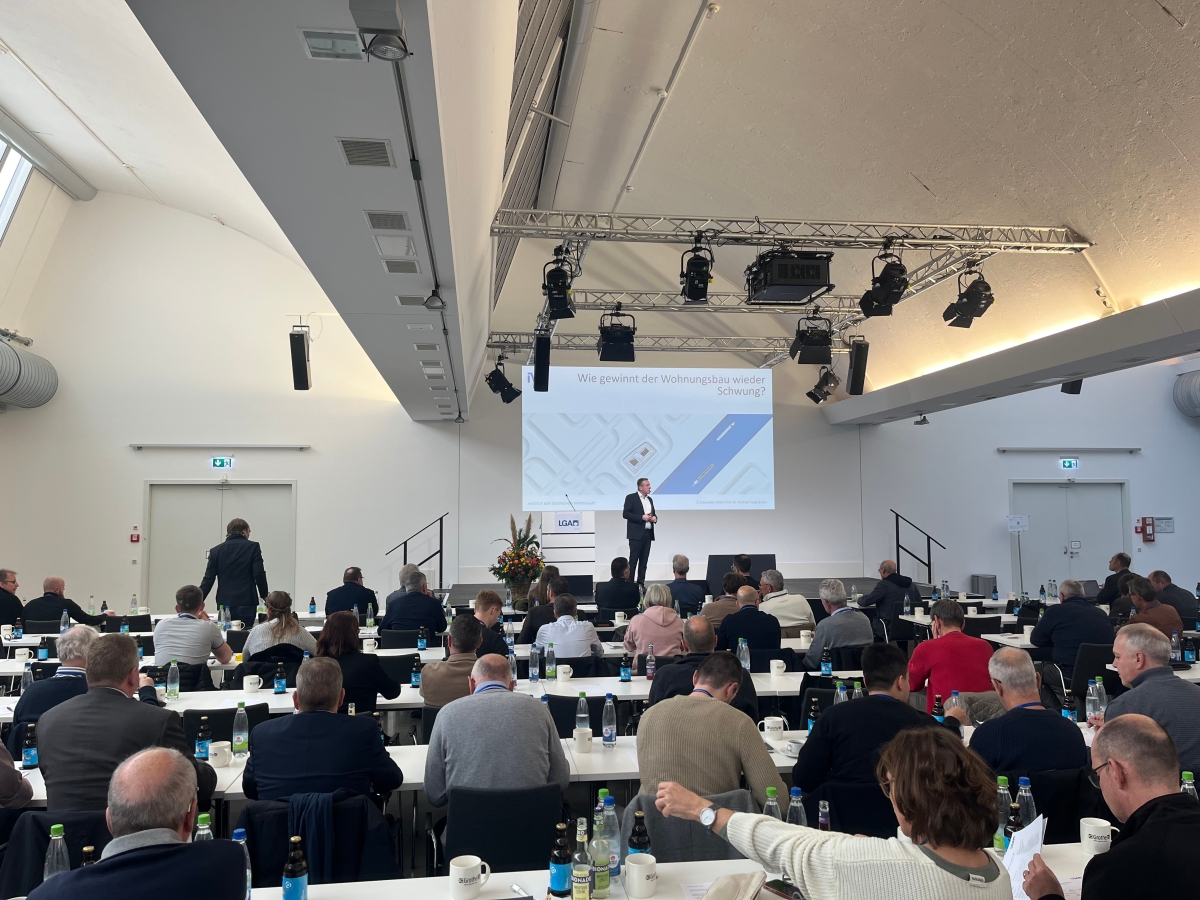


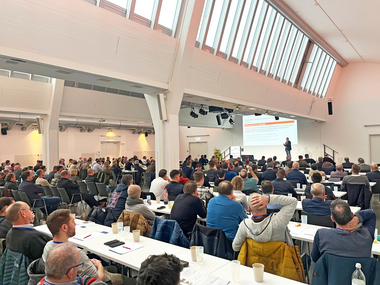
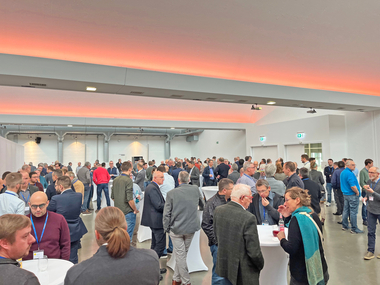
The most important conference for the brick and tile industry in Germany took place in Würzburg from 2 to 4 December 2025. The mood among the more than 200 participants was good and there was a lively atmosphere of conversation, like at a class reunion.
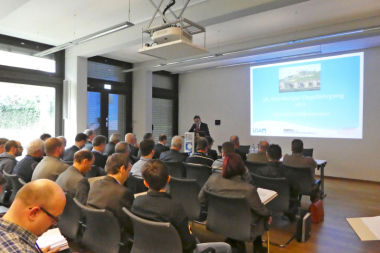
The first two days were devoted to the conference programme, as in previous years at Vogel Event Solutions in Würz-burg. Course director Andreas Klarmann welcomed the participants and gave an introductory overview of the programme. There were two changes to the programme due to cancellations. A minute’s silence was held for Dipl.-Ing. Michael Ruppik, former head of the Essen Institute for Brick Research (IZF), who passed away on 31 December 2024
On the third day, around half of the participants took up the offer of an excursion to the Hörl & Hartmann brickworks in Hainburg. There, they were not only able to see the production of backing bricks in detail, but also had further opportunities for discussion.
At the end of the conference, Klarmann thanked the participants for their keen interest and announced the 63rd course in 2026, which will take place from 1 to 3 December.
Conference Programme First Day
Frank Beschorner, Head of Glass/Ceramics Work Prevention at the Würzburg Administrative Professional Association (VBG), informed participants about occupational safety – current issues and support services offered by the VBG. Based on typical accident locations and contexts, as well as the statistical finding that accidents are becoming less frequent but that there were still two fatalities in processing plants in 2022, Beschorner emphasised the relevance of occupational safety measures. Important are personal identification and response systems, as well as measures for dust reduction and to prevent the unintentional restarting of plants and machines.
Jannis Gerling from ALEA Gesellschaft für Organisationsentwicklung und -beratung mbH in Marburg discussed improved employee relations under the title More than employees – how retention becomes attitude. While the working population and total working hours in Germany have increased, the number of hours worked per person per year has decreased. Market power is shifting from employers to employees as the number of young people and functional families is declining, raising the need for a sense of social security in the workplace. This is accompanied by a change in values: meaning and mental health are more important to the majority of employees than career. That is why the psychology of employee retention focuses on factors such as competence, autonomy and belonging. The most important reasons for resigning are managers and a lack of development opportunities. The goal of modern HR work should be to create a strong emotional bond with employees, which can be achieved by humanistic leadership, which Gerling described in detail.
After the lunch break, Prof. Dr. Michael Voigtländer from the Cologne Institute for Economic Research sought to answer to the question: How can residential construction regain momentum? Market observations and statistics show that it is still in a slump. Voigtländer evaluated existing measures, rejecting the rent cap but welcoming the housing construction turbo and the reintroduction of KfW55 funding. Housing construction could be helped by, f. ex., a reform of the KfW programmes, support for home ownership, a reduction in building standards and a transition to emission efficiency. The shortage of skilled workers in the construction industry must be addressed by increasing productivity, using digitalisation, integrating planning and construction, replicating construction activities, setting targets instead of standards, and pragmatism instead of legalism.
Katharina Armbrecht from the Federal Association of the German Brick and Tile Industry in Berlin highlighted current developments in environmental and energy policy. The topics covered included industrial electricity prices, CO2 emissions trading, the Industrial Emissions Directive, BREF ceramics and the mandatory environmental management system from 2027 (see p. 18). With regard to BREF, Armbrecht discussed the required annual measurement, the environmental performance limit value, and the limit values for dust, SOx, HCl, HF, NOx and TVOC.
Dr Ipek Ölcum, Managing Director of the Industrial Association for Clay Building Material, provided a detailed overview of clay building materials. Its advantages include sustainability, regional availability, reusability, sound insulation, and moisture and temperature regulation. In addition to clay bricks, there are wall clay mortar, clay plasters, clay panels and rammed clay, among other things. She urged the brick industry to include clay building materials in their portfolio, as they already have all the necessary expertise and equipment.
Philipp Niemann-Stryczek, Managing Director at IQstruct Engineering GmbH in Baesweiler, explained the efficiency factor operating data. He explained how his company can help increasing energy efficiency on the basis of operating data, using the example of a project at a brick manufacturer. More than 30 data sources were identified in the factory, data collection was implemented without interrupting production, and significant energy savings were achieved as a result of the evaluation. Obstacles include a historically grown infrastructure and individual large networks for administration and manufacturing with different interfaces. The resulting passive image of the production operation allows to aggregate and evaluate all available data.
How valuable is my raw material? – valuation options was the topic of M.Sc. Klaus Hantzsch, KI Keramik-Institut GmbH in Meissen. The term ‘valuable’ is ambiguous, f. ex. kaolin is valuable because it is both expensive and particularly suitable for porcelain production. As value is subjective, various criteria are suitable. In the brick industry, evaluation is carried out on a product group-specific basis, with factors including raw material and product properties, market situation, but also mineralogical and chemical composition and particle size. The KI offers corresponding tools and services: thermal analysis, thermogravimetry, dilatometry, small-scale simulation of ceramic firing.
Alexander Winkel, Institute for Brick Research Essen e. V., explained the measures of the Roadmap 2050 using the example of a clay block mass. He compared the results of a process analysis of a clay block firing and the natural gas consumption involved with a roof tile. The clay block undergoes more exothermic and endothermic processes than the roof tile. The former exhibits two CO2 peaks due to porosity agents and carbonates, while the latter only produces CO2 from natural gas. The clay block mass emits CO due to the smouldering of the porosity agents. Hydrogen in the kiln atmosphere reduces CO emissions almost completely because the substance reacts with water vapour to form CO2 and H2. Finally, Winkel discussed biogenic porosity agents as a means of avoiding CO.
In the final presentation of the first day, Dr Anne Tretau and Dr Sabine Schmidt from MFPA Weimar discussed concrete product development based on brick rubble. They presented the Sutracrete (Sustainable Traceable Concrete) project, which uses brick dust as a pozzolanic additive and brick aggregate as a sand substitute. The biggest challenge is sorting the masonry waste. Fluorescent markers will be used in future to facilitate the identification of materials. The colour of the concrete depends on the brick waste. The next steps outlined include EPDs for Sutracrete.
The traditional dinner took place this year in the Maschinenhaus in the Bürgerbräu Würzburg. The atmosphere was good and got even better as the evening progressed, with the buffet offering a choice of four menus and combinations.
Conference Programme Second Day
Severin Hoffmann, operations manager at Geiger Bodenverwertungskonzepte GmbH & Co. KG in Waltenhofen, provided information about secondary raw materials from large construction projects for the brick industry. After presenting the company as a supplier of secondary raw materials, Hoffmann illustrated procedure, quality features of the service, monitoring, etc. with a report on passing on excavated material from the large Stuttgart 21 construction site to brick manufacturers in southern Germany. There had been some scepticism to overcome. In the meantime, the purchase and use of excavated material in brickworks has become normal. Finally, he addressed the legal (waste vs. raw material) and technical challenges.
Koen Bosmans of CEE in Hamme-Mille, Belgium, presented superheated steam drying as a way to reduce costs. CEE specialises in thermal treatment, intelligent utilities, multi-fuel systems and technology development. Bosmans explained their principle: to apply only as much heat to the product as is necessary for drying. The drying process must be adapted to the results of the thermal analysis of the product, before fuel can be considered. He presented a system of superheated steam and a heat pump for the dryer. While a conventional dryer requires 1.3 kW/kg of energy, this figure drops to 1 kW/kg with superheated steam and to 0.2 kW/kg when supplemented by a heat pump.
Holger Rottmann from Lingl Solead presented measures for CO2-neutral brick production – a handout for practitioners. He discussed approaches and technologies offered by his company to increase efficiency by up to 50 per cent and reduce emissions. These include the decoupling of kilns and dryers, high-pulse clean gas burners that can save up to 35 per cent energy, dryers with heat pumps, the use of hydrogen and mixed fuels, and electric heating registers (being implemented in a project in the UK). A hybrid kiln with natural gas supplemented by electric operating options is currently under development.
Dr Volkmar Lankau from CeraFib GmbH in Meissen introduced fibre composites in kiln construction. He explained its structure, a composite of fibres with a matrix, and the manufacturing process. He illustrated the flexibility in mould construction using the example of a complex pipe connection with special shapes. Fibre reinforced composites’ properties are low density, high mechanical and thermal damage tolerance, chemical resistance, flexible structures and easy machinability. The material is suitable for burner nozzles, reduction lances and hot gas flaps.
Dr Matthias Händel from the IAB – Institute for Applied Construction Research in Weimar attempted to bridge the gap between the laboratory and industry with scalable firing tests for brick production. He presented tests carried out as part of the ‘KlimaZiegProd’ project (comparing laboratory and tunnel kilns for natural gas firing (backing bricks), determining the influence of firing products with hydrogen, comparing material analysis results with fuel gas consumption). The results: The product properties from laboratory and tunnel kilns hardly differ, energy balances can be created in the laboratory kiln, and comparison with laboratory analyses allows for targeted process optimisation. Advantages of firing with H2 include higher compressive strength and lower energy consumption. If sufficient, cheap green H2 is available, it can principally replace natural gas.
Julien Dornhuber from ONEJOON GmbH in Bovenden discussed brick firing in electrically heated kilns. The company manufactures kilns and offers electric heating for the brick industry. Dornhube discussed the advantages of electric heating. The aim is to increase efficiency while halving energy consumption. The kiln body is developed around the heating system and the product. ONEJOON offers various kiln systems, including roller hearth kilns, push kilns and tunnel kilns.
Christian Gäbelein from KERATEK GmbH in Bad Essen explained decarbonisation through the gradual electrification of thermal processes in brickworks. Gäbelein emphasised that electrification is meaningless without boosting energy efficiency first. He discussed various efficiency measures. Decarbonisation is feasible with hydrogen, but availability and prospective price developments make this unlikely. Electrification has already been implemented in pilot projects, has significantly higher investment costs, but is more practicable. He advocated gradual electrification and discussed this in detail for the various product groups. For example, roof tile kilns are likely to be much more expensive to electrify than backing brick kilns. In conclusion, every brick manufacturer should prepare for higher electricity demand, implement the known optimisations in the meantime, and rely on their own PV systems and storage solutions. Every kWh saved in the kiln or dryer saves CO2 certificates.
Dr Denny Mathew Alex from the Institute for Brick Research Essen e. V. spoke about the development and demonstration of a hybrid kiln for brick production. He discussed two currently running projects, eLITHE (see p. 23) und EluZi (see p. 24).
Precision and efficiency in firing control – strategies for pre-firing and main firing – were the topics of the presentation by Alexander Jahn (M. Eng.) from innovatherm Prof. Dr. Leisenberg GmbH + Co. KG in Butzbach. He explained the history of the company and its product, impulse valves. Precisely controllable burners are a key regulator for energy efficiency.
Jens Amberg from Luftmeister GmbH in Kirchzarten presented the latest developments in heat flow and flow measurement in process air and flue gas – with practical examples. The company has developed a probe with a sheath that offers protection up to 1,100 degrees Celsius. This makes it possible to tackle the previously problematic measurement of air and flue gas flow. This is relevant because, f. ex., only by measuring the waste heat potential can it be determined whether the use of a heat exchanger makes sense. The probe also helps to optimise the ratio of air to brick mass and to optimise the dryer.
In the final presentation of the conference section, Christian Matzen from Möllers Packaging Technology GmbH in Oelde spoke about packaging technology – processing of recyclable packaging. Due to the Packaging and Packaging Waste Regulation that came into force in February 2025, there is reason to treat plastic packaging differently. The increased use of thinner materials and recyclates requires new methods. Recyclates in particular behave differently than virgin film. Möllers offers a hood stretcher for this purpose. The new film covering machine is scheduled to be introduced in 2026..
Due to a fire alarm in the afternoon, the presentation by Dipl.-Geol. Holger Kreth from the Keramisch-Technologisches Baustofflaboratorium Hamburg e. V. in Reinbek on standardisation, quality management requirements and external monitoring had to be cancelled.