



Business continues at the Nordhausen Brickworks under new ownership and management


1. Introduction
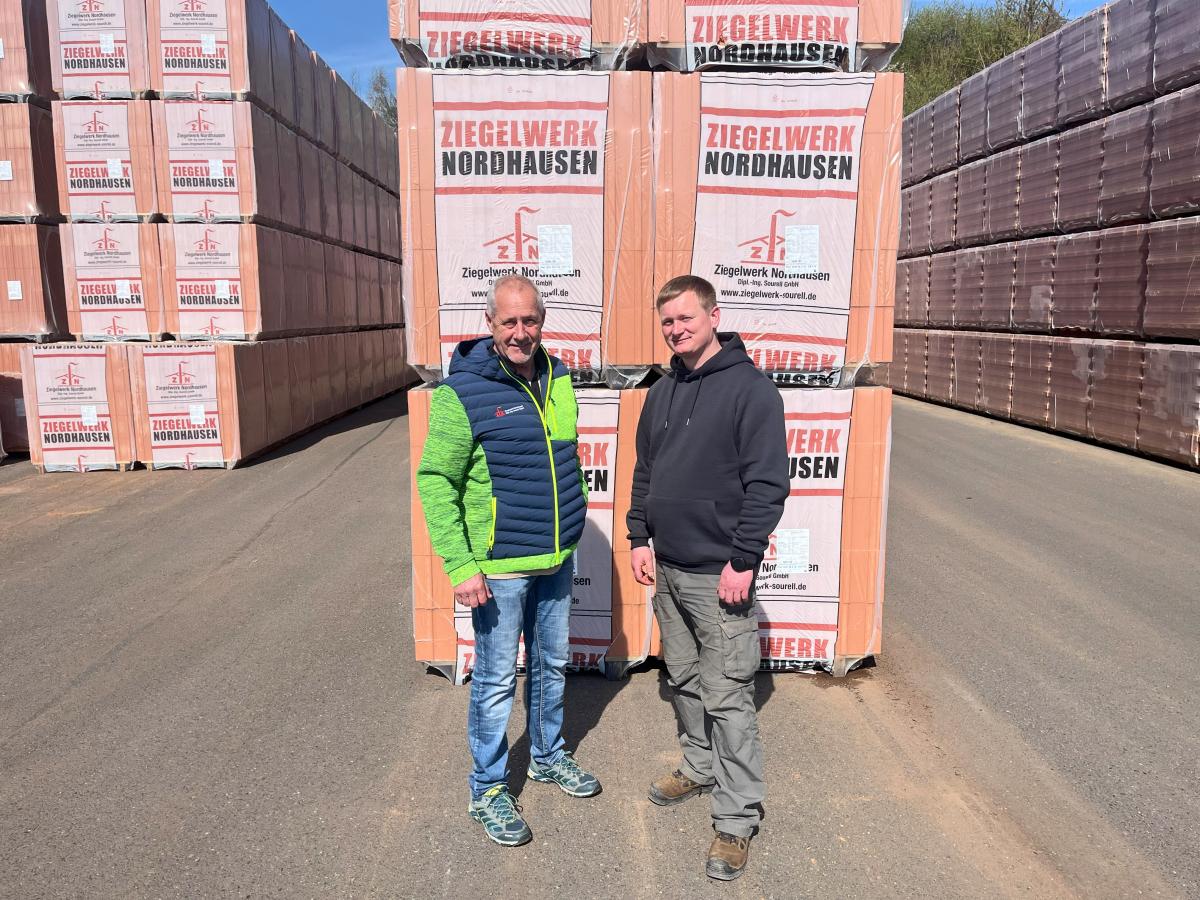
Some very welcome and somewhat surprising industry news recently came out of Thuringia, Germany: a family-run brickworks specializing in backing brick has found a successor. As of December 30, 2025, Marco Prange is the new owner and managing director of Ziegelwerk Nordhausen Dipl.-Ing. Sourell GmbH, located on the southern edge of the Harz Mountains. ZI was on site and spoke with him and the former owner, Dipl.-Ing. Thomas Sourell. Below, you’ll learn who the buyer is, why he’s taking on a backing brick plant in the current economy, and why Nordhausen is the perfect fit for this.
2. The Buyer – Growing up with a Brickworks
The Wefensleben Brickworks in the Magdeburg Börde district shaped Marco Prange. His father worked there—first an publicly owned enterprise (VEB) in the GDR, and since 1990 a Wienerberger facility. The plant was home to the young Prange; he always had the chimney in view, he says. As a student, he helped out at the plant, stacking pallets and driving the sweeper; later, he completed his apprenticeship there as an industrial mechanic. After a few detours, Prange began working there in 2010, first as a shift mechanic, then as maintenance manager, and after 2022 as production manager. While working, he earned his certification as an industrial foreman in metalworking in 2012 and as a technical business administrator in 2018.
Prange describes the plant as the center of his life. Not only because he was on the job from 8 a.m. to 6 p.m. and on call until 4 a.m. The staff was his family; his father, uncle, and best friends still work there. He spent Christmas with them on shift. For these instructive and fruitful years of collaboration, he extends his thanks to his long-time and former team, and especially to his former production foreman, Ingolf Kuch, and plant manager Friedrich Hobohm, as well as to his father, Gerd Prange.
Tinkering with and solving production problems gave Prange particular joy. He gladly accepted the challenge of getting the plant up and running again. “When others threw their hands up in despair, that’s when the fun began for me,” he says. He is also passionate about product development. He fondly recalls many night shifts during which he and his colleagues developed and tested molds for new formats in Wefensleben.
3. Taking Over Instead of Changing Jobs
Prange had not intended to take over management of the Nordhausen brickworks. He was actually looking for a way to escape the narrow confines and rigid conditions of working within the corporate group. That is why, when an acquaintance told him that the Nordhausen brickworks was looking for support, he inquired there. But Thomas Sourell was not looking for a production manager; rather, due to his age, he was seeking a successor. After a tour of the plant, Prange was impressed by its technical equipment and well-maintained condition and remained interested despite Sourell’s warning. He was drawn to the idea of focusing on brick production at his own plant and doing it better than he had experienced before. Ultimately, and against expectations, Sourell decided to sell him the plant.
4. The Seller – A Fourth-Generation Brickmaker
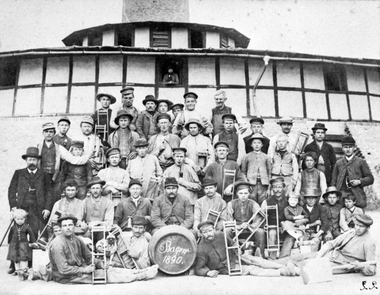
The Nordhausen Brickworks is both Thomas Sourell’s life’s work and part of his family history. It remained in the family until it was nationalized in 1972. Afterward, Sourell’s father worked there as plant manager, and the family lived right next to the factory until 1974. After reunification, Thomas Sourell, a civil engineer by training, was able to take over the plant again in May 1990 and manage it as the fourth generation. The fact that he had originally wanted to study mechanical engineering and had retained this interest significantly shaped the further development of the Nordhausen Brickworks. For the plant, which had fallen into disrepair during the GDR era, was still firing with a ring kiln and was, as Sourell is quoted as saying in a trade journal, an “industrial monument worthy of preservation.”
Step by step, Sourell and his team modernized the production facilities. In doing so, as he emphasizes, they never bit off more than they could chew. Investment costs and credit lines always remained within manageable limits. Much of the work was done in-house; Sourell always handled the technical planning himself and, as far as possible, implemented it with his own people – such as the kiln chember, the tracks, the wet and dry sides, the control cabinets, etc. (for a detailed description, see ZI 8/2016, p. 43ff.) “Except for software, we can do everything,” says Thomas Sourell.
In the interest of his team, it was important to him to maintain plant operations. Other interested parties who contacted Sourell were less concerned with the plant itself and more interested in using the location in central Germany for their own distribution or the pits or machinery for their own plants. Sourell cites a second reason in Marco Prange’s favor: he believed Prange was technically capable of handling the job.
5. Financing as a Joint Project
Covering the purchase price of a brick factory is no trivial task, especially not for an employee. Sourell supported Prange in this endeavor and organized the financing through a network of several banks as well as loans from the European Recovery Program. The basis for the commitments was a multi-year business plan, which Sourell describes as impeccable and atypical for the brick industry. The loan applications received further support from the Nordhausen Chamber of Industry and Commerce as well as a notary who agreed to work on a holiday so that the transfer of ownership could be completed on time on December 30. Sourell emphasizes that this success was the result of the commitment of all parties involved.
6. The Plant and Its Unique Features
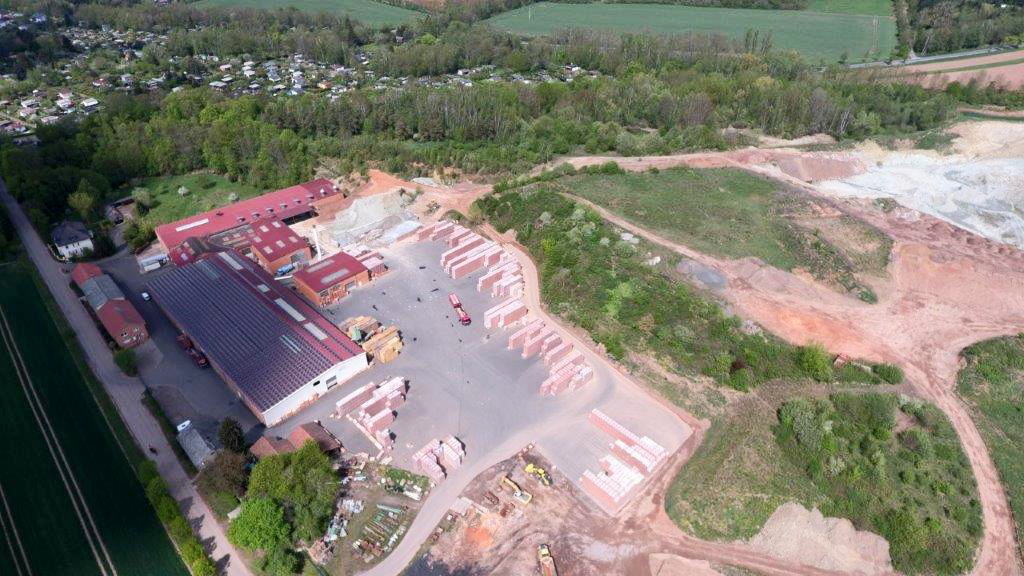
According to Sourell, the successful external financing was only possible because the plant is performing very well and is in a strong position. When asked about the reasons for this, he first points to “the boss’s keen eye” before listing a few other factors. First, the company has demonstrated a knack for energy procurement twice in recent years, signing multi-year purchase and supply contracts for electricity and gas at the right time in March 2021 and in 2025. Furthermore, the plant is designed, both technically and organizationally, for a very lean staffing structure with a total of only 16 employees, while also ensuring high flexibility with an annual production of around 40 million NF.
6.1. The Clay Pit
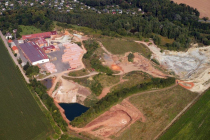
The clay is mined in monthly campaigns. One man transports a month’s supply from both pits in a week. With dump trucks, wheel loaders, and excavators, the clay mining operation is well-equipped; the pits are located just a few hundred meters from the plant grounds and are accessible via private roads. The production costs range from just 80 cents to one euro per ton of clay. The pits supply three different types of clay: two grades suitable for bricks and one suitable for water management and landfill construction. Based on current capacity, the reserves are mathematically sufficient for over 400 years.
6.2. Decoupled Systems with Buffers
The plant facilities are designed for buffering and decoupled production. If the processing system breaks down, the press can still continue operating using the raw material already processed from the two storage hopper feeders. Thanks to two storage tracks next to the tunnel kiln and 15 “spare” kiln cars, it is possible to either set continuously or switch to buffer mode. This not only reduces downtime in the event of unforeseen incidents and emergencies but also enables single-shift operation on weekdays. At night, on weekends, and on holidays, only on-call staff are on duty.
6.3. Product flexibility
In addition, the plant facilities allow for flexible changes during production. The setting machine can handle over 120 formats with very few modifications. The chamber dryers can be loaded independently of one another in batches with a wide variety of bulk densities. With the two storage tracks, it is possible to mix light and heavy batches in the kiln without having to make changes to the kiln settings.
6.4. No Sales Department in Niche Markets
In Nordhausen, there are no costs for sales or field service because neither exists. Sales rest on three pillars. The first, regional construction activity, has declined in recent years. The second pillar encompasses the production of specialty bricks for other brick manufacturers lacking the necessary capacity and capabilities, such as for supporting blocks. The third pillar consists of specialty products for historic preservation and reconstruction projects. In this area, the Nordhausen plant has earned a very good reputation, among other things, through brick deliveries for the Berlin Palace and the Berlin State Library.
6.5. Specialty: Product Development
The development of specialty bricks and custom formats for the historic preservation sector is a specialty of the Nordhausen plant. The plant’s equipment allows for small-batch production and testing; the team is qualified and motivated for this challenging task. Before supplying the City Palace, there were several hurdles to overcome; they now offer nine formats of this specialty product. “That,” Sourell emphasizes, “is what sets us apart – we produce things cost-effectively that others either cannot or will not manufacture.”
The plant offers around 130 different building ceramic products, including: vertically perforated and thermal insulation bricks, soundproofing bricks, specialty bricks such as U-blocks and supporting blocks, standard and thin formats for the German and Austrian markets, specialty interior and exterior wall bricks for the Dutch and Belgian markets, and ventilation bricks for the Polish market.
6.6. In-House Machinery Manufacturing
The plant’s flexibility stems from the fact that Sourell has designed all the machinery himself or purchased and modified it. As a result, the plant is tailored to its own needs while also being generously sized with future expansions in mind. “When we do something, we do it so thoroughly and sensibly that it can stand the test of time,” says Sourell. The Nordhausen team also handles the maintenance of all equipment themselves according to the PVI system (planned preventive maintenance), a method they learned back in the days of state-owned enterprises.
Because of this focus on mechanical engineering, Sourell has always employed two metalworkers on the side and trained apprentices. He invested capacity not needed for production into the plant’s own mechanical engineering. As he describes it, there was always enough to do, even in years with only seven months of production. Conversely, during economically better times, it annoyed him that there was no time left for this, even though there were plenty of ideas.
6.7. Income Beyond the Niche
In addition to building materials production, the Nordhausen Brickworks is active in other business areas that stem from its location. The clay suitable for hydraulic engineering is sold for relevant projects. For the areas of the pit where clay has been extracted, there is a mining law permit for backfilling, which is used for a construction waste landfill.
6.8. A Great Team
Sourell emphasizes the importance of a great team. All production staff are well-trained, motivated, and do excellent work. “They’re fully behind me and Marco,” says Sourell. Prange confirms that a good team is the best asset. At Wienerberger, he tried to lead honestly and sincerely, address mistakes openly, and work toward improvements. In doing so, he also lit the grill, bought everyone a drink, and talked with the team. He wants to continue that in Nordhausen.
7. Outlook
The starting conditions for Marco Prange seem quite promising. To ensure this continues, he has a number of plans. The direction he is taking is similar to that of Thomas Sourell.
He sees various options for expanding the product range. The growing popularity of clay bricks offers market potential for the plant that he would like to explore. Prange would like to try selling the production waste, which has previously been dumped in the building materials pit, as tennis court gravel.
At the plant, he wants to make preparations to be able to expand production if necessary. He is currently in contact with the owner of a neighboring property. This would make it possible to expand the chamber dryer to double its capacity without much hassle and largely through his own efforts. He also keeps an eye out for spare parts and bargains. At a scrap yard, he acquired a complete grinding system for a fraction of the new price. This is to be stored until it is needed.
To gather further ideas on how to further develop the plant, production, and products, and to exchange expertise, Prange is seeking contact with other brickmakers.
The biggest challenge for him, the new managing director believes, will likely be dealing with bureaucratic regulations and government agencies. He is supported in this by Thomas Sourell, who, having retired on April 1, will continue to assist him as a consultant for another two years. Sourell knows from personal experience how time-consuming and demanding this aspect of management can be. Not only because of new or stricter reporting requirements, such as ISO 50001, but also due to technical issues with data transmission, as was the case with the most recent environmental report.
Prange says that two years ago, he never would have dreamed of managing the plant in Nordhausen. Whether it turns out to be a good or bad dream remains to be seen. He considers himself lucky and is very grateful to Thomas Sourell for giving him this opportunity. He has even moved into the company apartment right on site to live there for the first few months while he familiarizes himself with the plant.