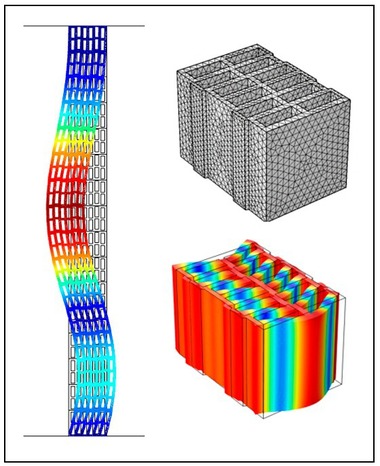
At the Brick and Tile Research Institute in Essen, a numerical and two-dimensional simulation model was developed on the basis of the DIN EN ISO 10140 series of standards. The objective was to analyse...
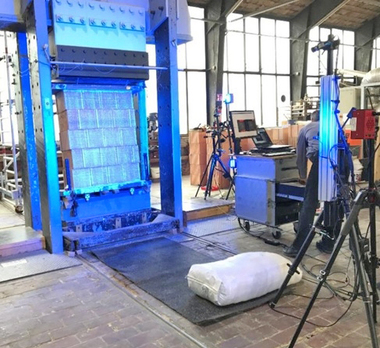
For building approvals for high-precision vertically perforated bricks, structural strength tests on individual bricks and specimen walls are essential. For high-precision vertically perforated bricks...
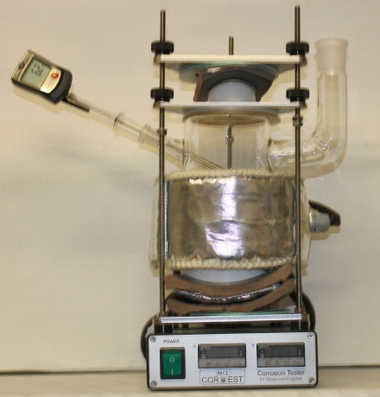
At the 55th Würzburg Brick and Tile Training Course 2017, Keramikinstitut Meissen presented a test for the weather resistance of roofing tile glazes and engobes (leaching test). For the test, boiling...
You get used to recurring faults, e.g. underpressure, in compressed air systems. The actual energy requirement is not really tangible in comparison to the physical optimum, and manufacturers and...
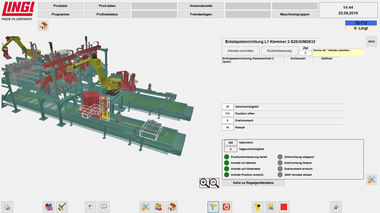
For complex plants it is hard to design a text-based operating system in a clear structure. In the talk, a new software option is presented, which extends the proven Lingl machine operating system...
It is the year 2050. Greenhouse emissions have been reduced by more than 80% in Germany. CO2 trading has long ceased in the building ceramics industry. The thermal processes, especially firing, are...
Keller HCW develops and implements individual robotic solutions for various industrial applications. The focus is on functional solutions for the heavy clay industry. Back in the mid-1990s, Keller...
The brick and tile industry is obliged to reduce its CO2 emissions by at least 32% by 2025, as compared to 2005 levels.Kilns and dryers, though, are already very efficient, and the remaining latitude...
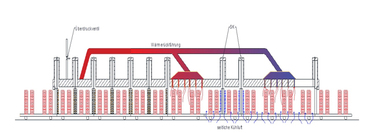
In process terms, modern tunnel kilns in the brick and tile industry involve two coupled subprocesses that take place in succession.The first of these consists of a preheating process to maturing...
Non-destructive moisture measurement systems work from the surface to determine moisture content. As a result, the water content of near-sensor layers has the strongest influence on the delivered...