



Wienerberger receives funding for the construction of the world’s first commercial-scale hydrogen-fired brick kiln


According to a press release dated 25 March 2026, Wienerberger UK & Ireland has successfully secured government funding to enable the implementation of its hydrogen kiln project at the brickworks in Denton, Greater Manchester. The group regards this project as an important step towards the decarbonisation of the UK’s heavy clay industry.
Backed through the UK Government’s Industrial Energy Transformation Fund (IEFT), the funding will part support a £6 million conversion programme that will transition the site’s existing natural gasfired brick kilns to run on 100 percent green hydrogen. This breakthrough will make Denton the first commercial scale hydrogen fired brick plant in the world, firmly establishing Wienerberger as a pioneer of low carbon industrial heat innovation.
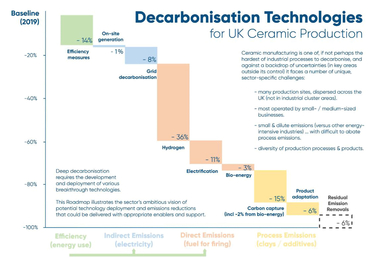
Hydrogen firing has been identified by the UK Government as a promising long term solution for high temperature industrial processes. Denton brickworks now stand as the flagship deployment for the UK ceramics sector, providing a replicable blueprint for future decarbonisation across Wienerberger’s wider manufacturing network.
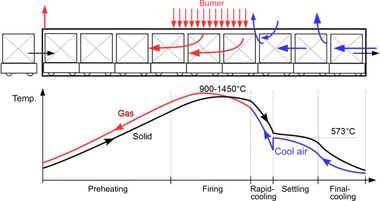
The project includes the retrofit of two tunnel kilns – replacing 224 natural gas-powered burners, installing new hydrogen supply infrastructure, and upgrading electrical and control systems – without altering the structural integrity of the existing kilns.
Linked to the Hydrogen Allocation Rounds (HAR) funding scheme, hydrogen will be supplied under a 15 year Hydrogen Supply Agreement with Trafford Green Hydrogen, jointly developed by Carlton Power and Schroders Greencoat. Deliveries will be made via tube trailers to a dedicated onsite hydrogen offloading and pressure reduction station.
The target is for one kiln to be fully operational, or both kilns partially converted, to hydrogen firing by Autumn 2027. The complete transition to 100 percent hydrogen firing across the entire site is scheduled to commence in Autumn 2028.
Once fully operational, the switch from natural gas to green hydrogen is expected to reduce CO2 emissions at the Denton brickworks by over 11,600 tonnes per year, equivalent to a 9 percent reduction in Wienerberger Limited’s annual Scope 1 and 2 carbon emissions. This investment supports wienerberger’s longterm strategy to reach net zero carbon emissions and helps to meet rising demand for low carbon building materials across the UK.
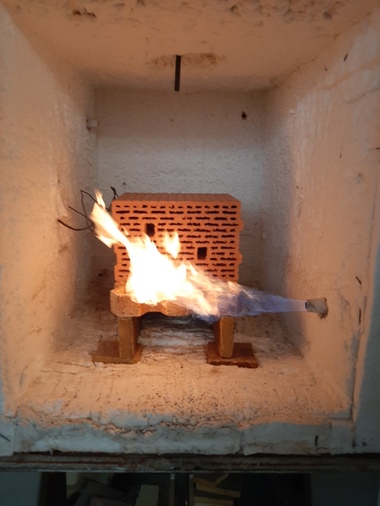
As Denton prepares for hydrogen-fuelled firing, its on-site teams will undergo training to enhance their skills, focusing on newly implemented safety systems and updated operational procedures. Meanwhile, thorough testing carried out through a DESNZ (Department for Energy Security and Net Zero)-funded, cross-industry research programme led by Ceramics UK provided confidence that the strength, appearance, and wider technical performance of the clay bricks will remain unchanged. This ensures that the switch to hydrogen firing will have no significant impact on product quality or performance.
The Denton brickworks hydrogen kiln project forms part of Wienerberger UK & Ireland’s broader sustainability roadmap, which includes the installation of the UK’s first fully electrified tunnel kiln for manufacturing roof tiles at Broomfleet – showcasing the company’s multi technology approach to achieving net-zero carbon emissions by 2050.